

This alcoholic beverage is one of the oldest in the world. It has been brewed for well over eight thousand years BC in the Transcaucasus region. Over time, spreading across the planet, it reached our region. Read more about the history of the ancient alcoholic beverage, namely, who and when started growing grapes here, the formation of this culture, and the modern period of the city’s winemaking at philadelphia.name.
Winemaking in Philadelphia
The emergence of wine in The City of Brotherly Love is primarily related to the history of our continent. During the period of European colonization, the traditions of the latter were spread to the territory of the New World, in particular, the activity of growing grapes and the subsequent process of turning them into an alcoholic beverage.
Although historical sources show that even before the European grape variety appeared, a local one grew here, which was often consumed by Indians. However, its characteristics were not suitable for making wine. So, we can conclude that the grape variety was transported to America precisely to spread the tradition of winemaking.
In 1682, the future founder of Philadelphia, William Penn, once again visited America and brought a grape variety with him. The politician plants grape vines in the Lemon Hill neighborhood. However, this crop was eaten by parasites until a hybrid of European and American grapes, better known as fox grapes was cultivated.
At the end of the eighteenth century, beyond two hundred acres of land were planted with grapes near the shore of the local river in Spring Mill. The owner of the current vineyards was Pierre Legault, the head of the Pennsylvania Vine Company. His company was successful because it debuted on the vineyard market in the United States. At that time, such personalities as Benjamin Rush, Aaron Burr, Stephen Girard, Alexander Hamilton and John Hopkins split shares in the business, which was gaining momentum.
As early as 1900, there was no district in our city where winemaking was not practiced. In general, the first half of the twentieth century in the history of this culture resembled a roller coaster. When Prohibition was in effect, there was a collapse in production, but after the law was lifted, there was a wine boom in the region. To manage and promote the progressive development of this industry, the Pennsylvania Liquor Control Board was established in Philadelphia. By the decision of the latter institution on the eve of World War II, wine and other alcohol could be sold only by retailers.
In 1968, the Pennsylvania Limited Winemaking Act was enacted. It helps to ensure that the state creates working conditions for winemakers who then sell directly to customers.
The last years of the twentieth century are memorable for the history of the wine business in Philadelphia because entrepreneurs here had only a certain number of product licenses, but inventors knew how to get out of this situation. The latter invited guests to the event with a call to come with their own bottle.
By 2016, wine was developing in the city’s three main wine-growing districts.
The modern period of wine history
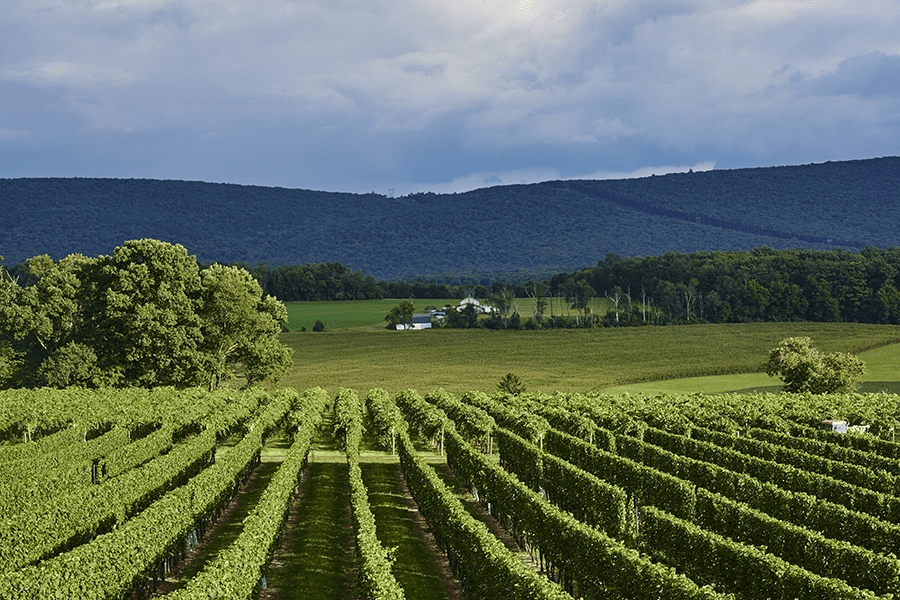
In the modern period, the above-mentioned wine-growing areas continue to produce a lot of wine. Thanks to the latest legislation, winemakers can ship alcoholic beverages directly to restaurants, bars, hotels, grocery stores, etc. As of 2019, there were well over two hundred vineyards producing alcoholic beverages in our region.
Nowadays, many people in the city know about the legendary enterprise called Sand Castle. The winery was founded back in 1974, when they made wine from the first varieties of crossed American-European grapes. The peculiarity of this company is that they keep their traditions alive. First and foremost, they care about the quality of their products and involve those who want to learn the art of winemaking. In addition, they conduct introductory lectures and excursions for fans of this culture.