

When we think of medical robots or surgical innovations, our minds usually conjure up Silicon Valley or Tokyo’s state-of-the-art laboratories. However, the true cradle of medical engineering—which forever changed how we save human lives—is located on the US East Coast, in Philadelphia. Here, academic rigor and engineering audacity forged a path from the bulky mechanical machines of the 1950s to autonomous microrobots capable of destroying tumors from inside a cell.
Read more about the rise of precision medicine in one of America’s largest metropolises on philadelphia.name.
The Dawn of Bioengineering: John Gibbon’s Heart-Lung Machine
Medical robotics and high-tech surgery did not appear out of thin air. Their key catalyst was the need to temporarily replace vital human organs with complex engineering systems during critical interventions when biological resources were exhausted. The first major breakthrough of this kind, which set the standards for modern cardiac surgery, occurred on May 6, 1953, at the Jefferson Medical College Hospital.
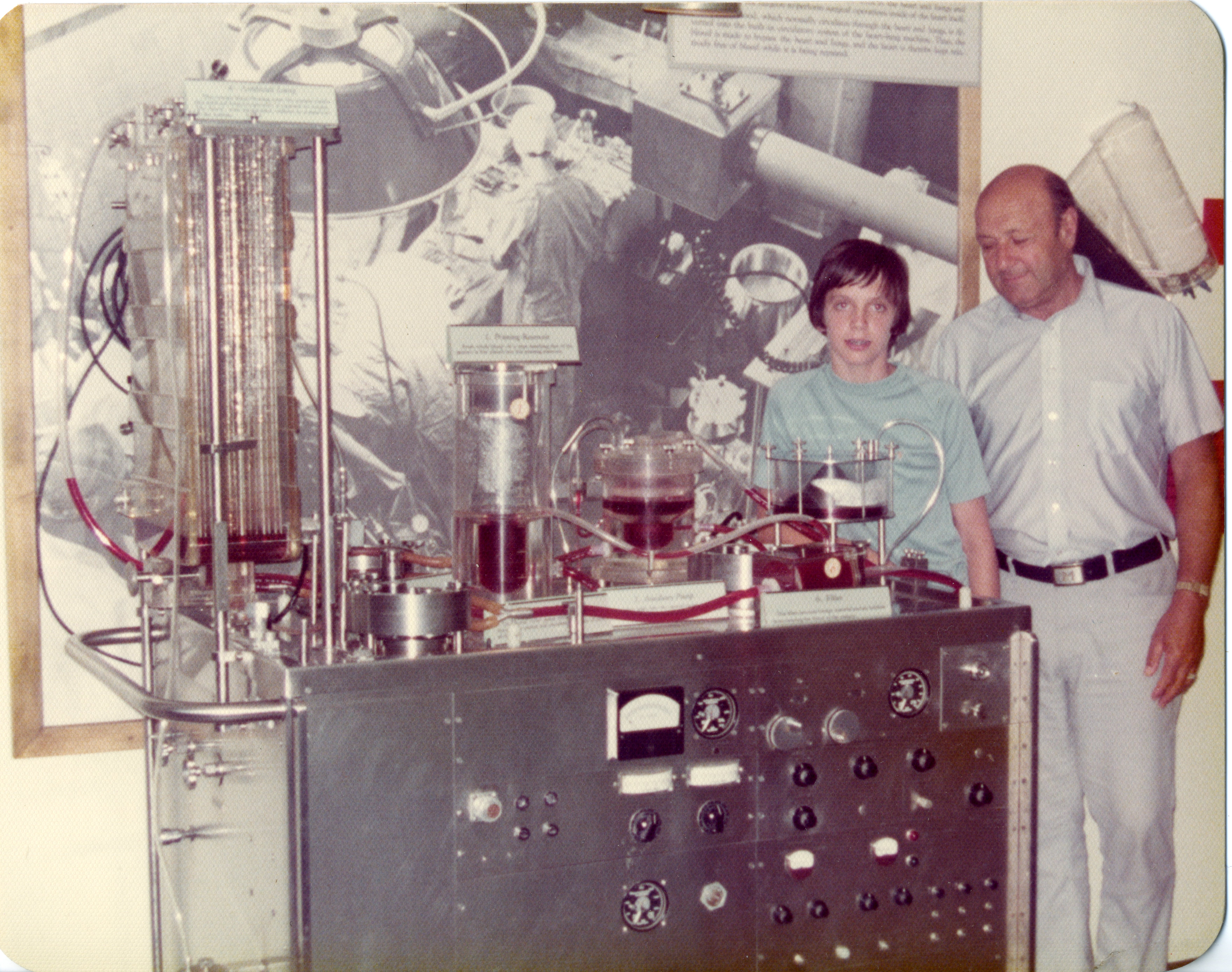
Dr. John Heysham Gibbon Jr. performed the world’s first successful open-heart surgery on 18-year-old patient Cecelia Bavolek, fully connecting her to a heart-lung machine of his own design. For 26 critical minutes, the young woman’s heart and lungs were completely stopped to repair an atrial septal defect. Their functions were fully sustained by the Model II, a massive engineering system developed by Gibbon in close collaboration with IBM’s leading engineers.
This historic milestone relied on several unique technological and operational solutions that bridged the gap between mechanics and the living organism for the first time.
- Cell-safe artificial oxygenation. The primary engineering challenge was oxygenating blood outside the patient’s body. Gibbon and IBM developed a vertical-screen oxygenator. Blood flowed down six wire mesh screens in a thin film, absorbing oxygen and releasing carbon dioxide without forming dangerous air bubbles or mechanically damaging red blood cells.
- Precise roller pumping. To maintain stable blood circulation through the circuit, DeBakey roller pumps were used instead of destructive piston pumps. These pumps provided constant, smooth, and controlled arterial pressure mimicking human cardiac output.
- Integrated IBM electronic controls. IBM engineers equipped the massive apparatus with advanced automation of the time—volume sensors and electronic regulators. They monitored fluid levels in reservoirs, synchronized blood inflow and outflow rates, and prevented critical blood loss during perfusion.
This successful operation was the culmination of nearly two decades of grueling work by John Gibbon. He had begun developing the concept of artificial circulation in the 1930s after witnessing a patient die from a massive pulmonary embolism. Designing a working model required far more than medical expertise; it demanded a deep understanding of fluid dynamics, hematology, and precision instrumentation. This transformed surgery from a craft into an interdisciplinary science.
The achievement of the Philadelphia inventors proved a fundamental truth: artificial mechanical systems could safely and delicately integrate with human biological processes. The advent of the heart-lung machine paved the way for treating previously incurable heart defects. It also laid the conceptual foundation for transplantology, artificial organs, and ultimately, modern medical robotics.
Teaching Machines to See and Feel: The GRASP Lab
In the 1970s, robots worldwide were little more than “blind” industrial arms bolted to car factory floors. They performed repetitive tasks but lacked any environmental feedback. For a robot to assist a surgeon in an operating room, it had to learn to perceive the human body.
This challenge was solved in 1979 when computer science pioneer Ruzena Bajcsy founded the GRASP Lab (General Robotics, Automation, Sensing, and Perception) at the University of Pennsylvania (UPenn) in Philadelphia. Bajcsy pioneered the concept of “active perception.” GRASP engineers were the first in the world to integrate computer vision, pressure sensors, and tactile feedback on a large scale.
The transition from rigid mechanical routines to intelligent interaction with the environment was driven by three core technologies developed at GRASP.
- Mathematical modeling of deformable bodies. Unlike rigid car parts, human tissues change shape at the slightest touch. GRASP researchers designed the first algorithms capable of calculating the resistance and elasticity of soft biological structures in real time.
- Hybrid haptic feedback. Engineers developed sensor arrays that did not just detect pressure, but instantly fed resistance forces from the manipulator back to the control console. This allowed the physical feedback of tissues to be felt directly by the operator’s fingertips.
- Dynamic computer vision. Moving beyond static image analysis, “active perception” taught robotic cameras to automatically adjust their viewing angle, focus, and lighting in response to changes in the surgical field, mimicking human eye movement.
These algorithms and mathematical models of interaction with deformable materials eventually became the backbone of robotic surgery. They allowed forces to be translated from the robot’s instruments back to the surgeon’s fingers, creating a lifelike sense of touch. Without this delicate haptic feedback, high-precision operations would be impossible, as doctors would risk damaging hidden blood vessels or nerve endings.
The GRASP Lab essentially sparked a cognitive revolution in robotics, turning cold mechanical arms into sensitive instruments equipped with a digital analogue of human touch. Ruzena Bajcsy’s legacy demonstrated that a medical robot is not a replacement for a surgeon, but an intelligent extension of their hands—capable of performing micro-level work with surgical precision and patient safety in mind.
Transoral Robotic Surgery: Ending High-Impact Invasive Procedures
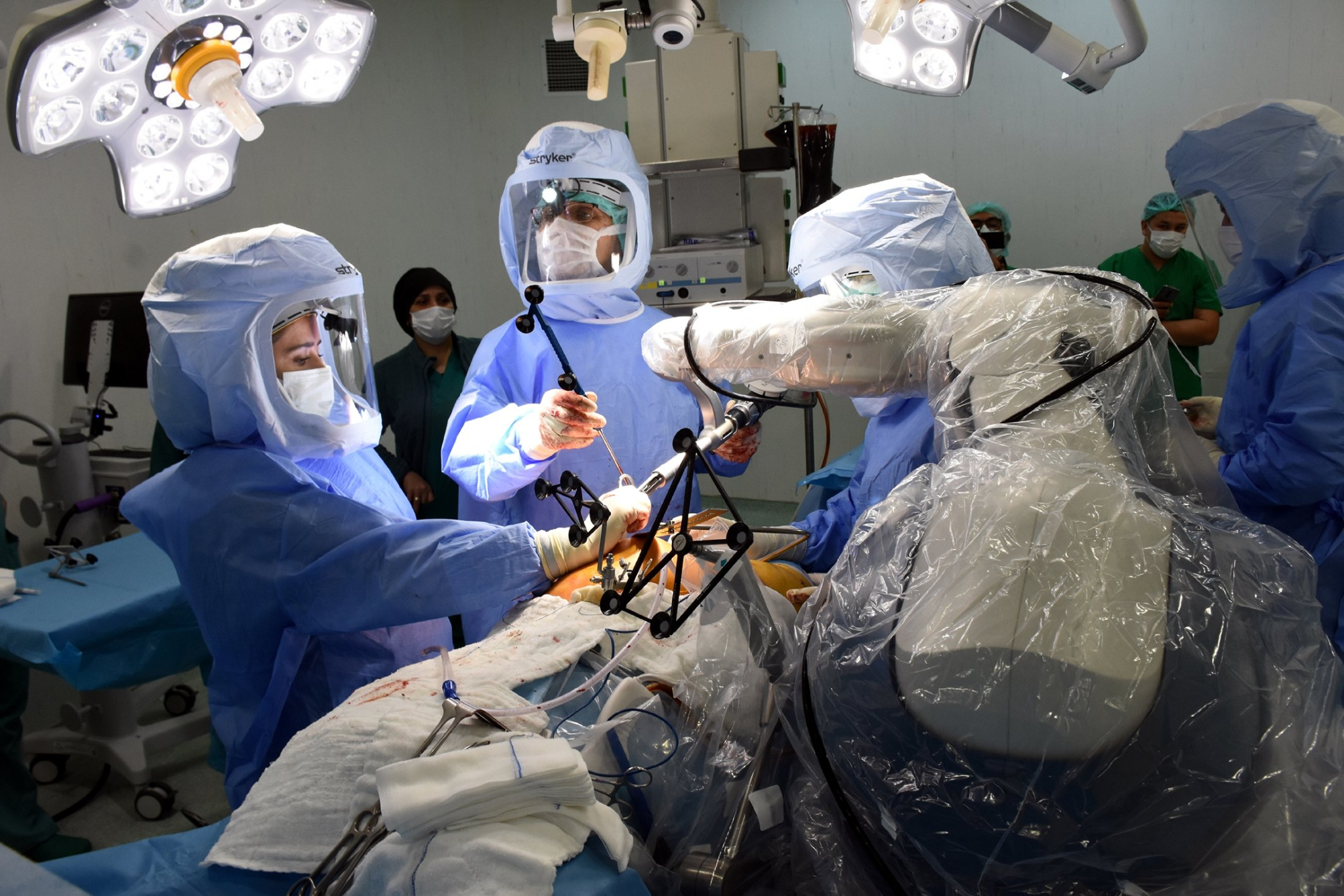
By the mid-2000s, surgical robots like the da Vinci system were already used in urology and gynecology, where the abdominal cavity offers relatively ample room to maneuver. However, surgeries for throat, base-of-tongue, or laryngeal cancer remained highly invasive. To reach a tumor, surgeons had to make large incisions in the neck and saw through the lower jaw, often permanently depriving patients of their ability to speak and swallow normally.
The breakthrough came in Philadelphia. UPenn Medicine professors Gregory Weinstein and Bert O’Malley teamed up with engineers to adapt robotic arms to the tight space of the human mouth. Together, they developed TORS (Transoral Robotic Surgery).
Engineers designed motion-scaling algorithms and miniature tools that allowed the multi-armed robotic system to be guided directly through the patient’s open mouth. This enabled the robot to operate in the ultra-confined spaces of the upper airway with perfect 3D visualization and zero external facial incisions. In 2009, the FDA officially approved Philadelphia’s TORS technology as a global standard of care.
The Quantum Leap: Autonomous Robots the Size of a Grain of Salt
Philadelphia’s modern engineering ecosystem is no longer limited to large robotic arms like the da Vinci. The new frontier in healthcare is unfolding at the micro and nano levels, where traditional scalpels are yielding to autonomous digital agents.
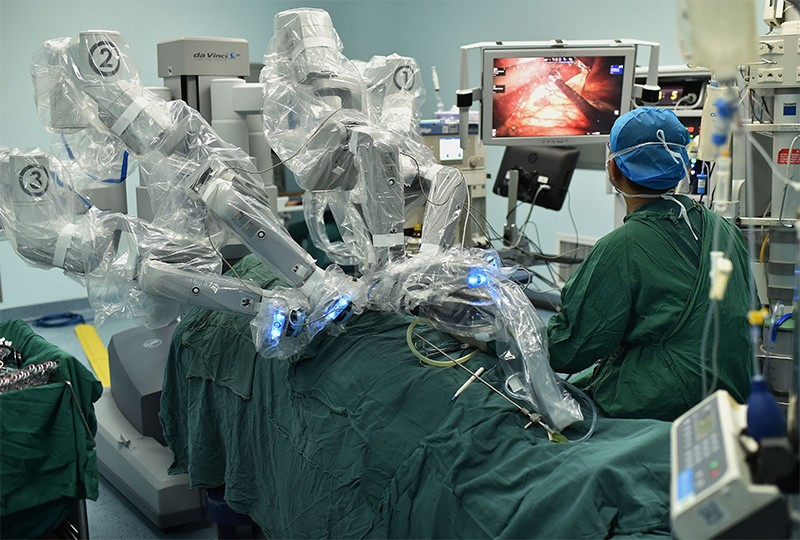
At Penn Engineering, a team led by Professor Marc Miskin developed the world’s smallest autonomous microrobots, each no larger than a grain of salt. This microscopic system is a triumph of nanotechnology, integrating three fully functional components:
- a silicon computer chip that serves as the brain, making decisions based on environmental parameters;
- photosensitive solar cells that provide wireless power via laser beam;
- platinum micro-leg actuators, measuring only a few dozen atoms thick.
The robot can navigate effectively through fluids and biological tissues by generating a local electric field around itself.
This breakthrough in molecular engineering and autonomous micro-tracking is driven by three parallel areas of development currently being pursued in Philadelphia’s research centers.
- Nanoscale electrochemical actuation. The platinum legs of Miskin’s robots bend in response to miniscule electrical charges when current from the photocells hits their surface. This atomic-level mechanical movement allows the device to literally “swim” through intercellular space without relying on bulky magnetic drives.
- Magnetic navigation in viscous environments. In parallel, Drexel University researchers led by Professor Gary Friedman are developing wireless magnetic control methods for microrobots navigating the complex, viscoelastic environments of the human body. Generating dynamic external magnetic fields makes it possible to coordinate entire swarms of these microparticles inside blood vessels or deep tissues.
- Targeted destruction without systemic toxicity. Engineers are designing systems to deploy millions of nanoparticles into the body to autonomously hunt down cancer cells. Once a target is identified by specific biomarkers, the microrobots can destroy tumors with pinpoint electrical pulses, clear bacterial biofilms from hard-to-reach root canals, or locally block receptors to relieve nerve pain, all without the destructive systemic toxicity of traditional chemotherapy.
This radical shift toward microscopic therapy is rewriting the rules of traditional pharmacology and oncology. Instead of flooding the entire body with aggressive chemotherapy drugs that destroy healthy and diseased cells alike, engineers are offering the targeted delivery of digital code and localized physical interventions directly at the site of pathology.
The Philadelphia Code of Medicine
The history of Philadelphia’s medical triumphs demonstrates an astonishing evolution of scale—from the monumental mechanical systems of the last century to today’s nearly invisible, autonomous devices. A city that once dared to stop the human heart to save it, replacing vital biological organs with heavy machinery, is now taking the surgical field to the cellular level. This path reflects more than just a change in technology; it represents a global shift in how we approach healing, where the surgeon’s traditional tools and standard pharmaceuticals are yielding to intelligent, precision digital systems.
In modern medicine, Philadelphia has firmly established itself as an intellectual stronghold where the line between computer science and living tissue is beginning to blur. The legacy of Philadelphia’s researchers is shaping a new paradigm of healthcare—one in which technological flexibility, targeted delivery, and algorithmic precision serve as humanity’s primary weapons against previously incurable diseases.
