

For a long time, the progress of conventional aviation depended on high speeds and mile-long runways. Yet, the real engineering challenge lay in freeing aircraft from their geographic dependence on sprawling airfields, teaching them to master the vertical dimension directly from city rooftops or confined natural clearings.
The primary incubator for this conceptual revolution—which forced machines to operate under entirely new laws of dynamics—was the industrial and scientific hub of Philadelphia. It was here that inventors systematically reimagined the very architecture of flight, charting a course from the earliest mechanical rotors to autonomous digital intelligence. We explore the rise of this pioneering industry below on philadelphia.name.
The Autogyro Era: Rooftop Mail and Cierva’s Patents
By the 1920s, conventional airplanes were already traversing great distances, but their need for extensive runways made them impractical for dense urban environments. Harold Pitcairn, a visionary aircraft designer and founder of the Pitcairn Aircraft Company in suburban Philadelphia, set out to solve this problem and bring aviation directly into the heart of major cities.
Pitcairn acquired the U.S. patent rights of Spanish engineer Juan de la Cierva, the inventor of the first successful autogyro—a unique hybrid of airplane and helicopter whose overhead rotor spun freely, driven solely by the oncoming airflow rather than a direct engine connection. The resulting model, the Pitcairn PCA-2, became a global sensation. In 1931, it showcased its remarkable takeoff and landing capabilities by touching down directly on the White House lawn before President Herbert Hoover.
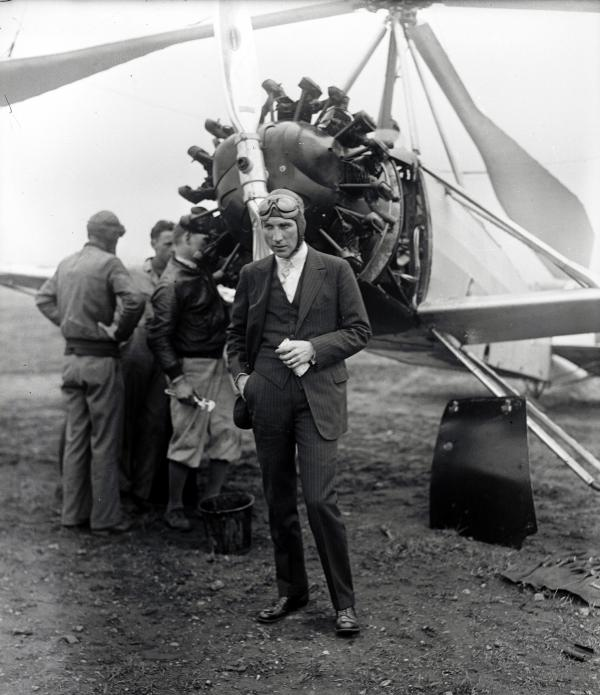
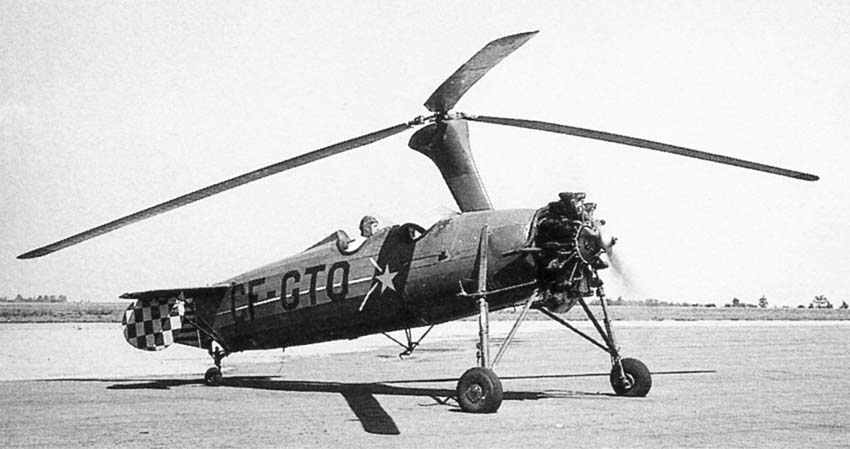
Meanwhile, the Kellett Autogiro Corporation was actively operating within Philadelphia itself. Its engineers and pilots went on to establish the world’s first regular airmail service utilizing vertical-takeoff aircraft operating directly from a city facility.
Historical fact: On July 6, 1939, a Kellett KD-1B autogyro equipped with a specialized mail compartment took off from the roof of Philadelphia’s Main Post Office on 30th Street. Within minutes, it delivered sacks of mail across the Delaware River to Camden Airport, proving the practical utility of rotary-wing aviation for urban infrastructure.
The success of this early phase of rotary-wing development, as well as its integration into Philadelphia’s logistics network, relied on three revolutionary engineering and operational breakthroughs:
- The Phenomenon of Autorotation. Unlike later helicopters, an autogyro’s main rotor operated in a state of free rotation (windmilling) driven by the airflow from a conventional nose-mounted thrust propeller. This simplified the design and guaranteed unmatched safety; if the engine failed, the aircraft would glide gently to earth beneath its autorotating blades like a large parachute.
- Innovative Articulated Rotor Blades. Cierva’s key patent, acquired by Pitcairn, solved the problem of dissymmetry of lift. By introducing flapping hinges, the design allowed the rotor blades to move up and down dynamically as they spun, fully stabilizing the aircraft in flight.
- Dedicated Infrastructure Adaptation. The roof of Philadelphia’s Main Post Office was specifically designed and reinforced to receive aircraft. Engineers calculated wind loads and updrafts rising from urban streets, enabling the Kellett KD-1B to run daily mail flights on a strict schedule, bypassing congested surface intersections and bridges.
These bold aviation experiments on Philadelphia’s rooftops and lawns permanently altered how urban space was conceptualized, lifting daily city logistics into the third dimension. Rather than viewing aviation solely as a link between distant cities, Philadelphia’s designers put rotary-wing aircraft to work directly within the metropolitan core, assigning them localized, routine postal delivery duties.
Ultimately, the autogyro era of Pitcairn and Kellett served as the critical technological and conceptual bridge that paved the way for Igor Sikorsky’s conventional helicopters. The short-field takeoff algorithms, rotor aerodynamics, and operational experience in the congested airspace above skyscrapers developed in Philadelphia established the foundation for modern civil and rescue aviation.
The Piasecki Revolution and the “Flying Bananas”
The definitive leap to conventional helicopters came courtesy of Frank Piasecki, the son of Polish immigrants who studied at the University of Pennsylvania. In 1943, he became the second person in the United States, after Igor Sikorsky, to fly a domestically designed and built helicopter, the PV-2.
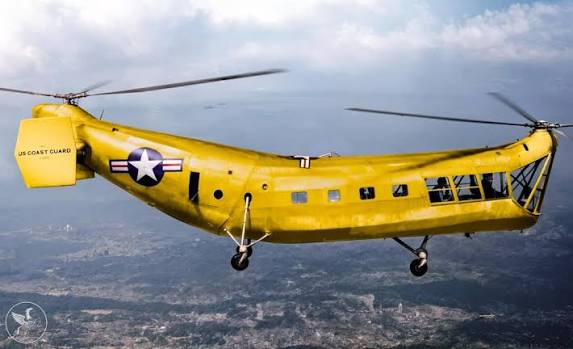
Piasecki’s landmark engineering breakthrough, however, was solving the payload capacity problem. Single-rotor helicopters of the era struggled to lift heavy cargo due to stability limitations. In 1945, his P-V Engineering Forum (later renamed Piasecki Helicopter), based in the Philadelphia suburb of Morton, built the HRP-1. Because of its distinct curved fuselage shape designed to prevent the forward and aft rotors from colliding, the aircraft earned the nickname “The Flying Banana.” It was the world’s first successful tandem-rotor helicopter.
This revolutionary configuration fundamentally transformed the perceived capabilities of rotary-wing aviation, relying on three key benefits:
- Elimination of power loss to a tail rotor;
- Massive internal cabin volume and easier center-of-gravity balancing;
- Superb stability in crosswinds and turbulent air currents.
This breakthrough established the region’s aerospace focus for decades to come. Piasecki’s company was later acquired by the Vertol corporation, which subsequently merged into Boeing. The massive manufacturing facility in Ridley Park became the primary production site for the legendary CH-47 Chinook heavy-lift military helicopters and the unique V-22 Osprey tiltrotors—both of which rely on the tandem-rotor philosophy of lift distribution.
Frank Piasecki’s invention permanently secured Greater Philadelphia’s reputation as the heavy-lift helicopter capital of the world. The evolution from the “Flying Banana” to today’s heavy-lift air workhorses proved that stepping away from conventional aeronautical design can yield enduring standards that remain vital eighty years after their initial flight.
Arthur Young’s Secret Barn Experiments in Radnor
While Piasecki scaled up rotors for military operations, another Philadelphia-area inventor, Arthur Young, focused on stabilizing smaller aircraft. From 1928 to 1941, inside an ordinary barn in suburban Radnor, Pennsylvania, he conducted private, focused experiments using flying model helicopters.
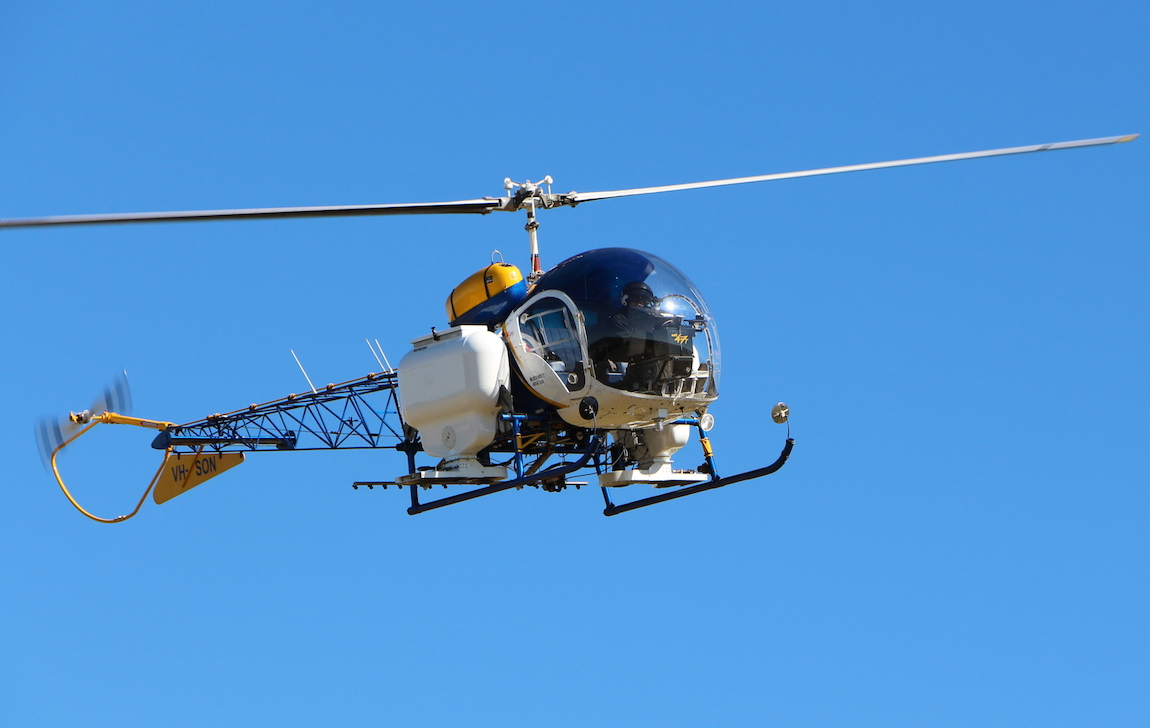
At the time, the chief engineering obstacle for helicopters was their tendency to instantly roll over due to minor wind gusts or fuselage shifts. The persistent inventor solved this fundamental issue by creating the stabilizer bar—a simple, elegant device that prevented the helicopter from tipping out of control.
Recognizing that his technology was ready, Young presented his patents and a perfectly functioning flying model to the leadership of aviation giant Bell Aircraft. Integrating his Philadelphia-born design into mass production yielded the legendary Bell 47—the world’s first helicopter to receive a commercial type certificate for civil use in 1946. Its distinctive “goldfish bowl” canopy and open-frame fuselage quickly became the defining visual icon of mid-century aviation.
The Radnor experiments showed that groundbreaking engineering breakthroughs do not always require massive industrial operations from the start; sometimes, a private barn, mathematical discipline, and a deep grasp of inertial physics are enough. Thanks to Young’s ingenuity, helicopters evolved from unpredictable experimental craft flown only by daring military pilots into safe, everyday tools used by rescuers, paramedics, and commercial pilots worldwide.
The Digital Era: Autonomous UAV Swarms at the GRASP Lab
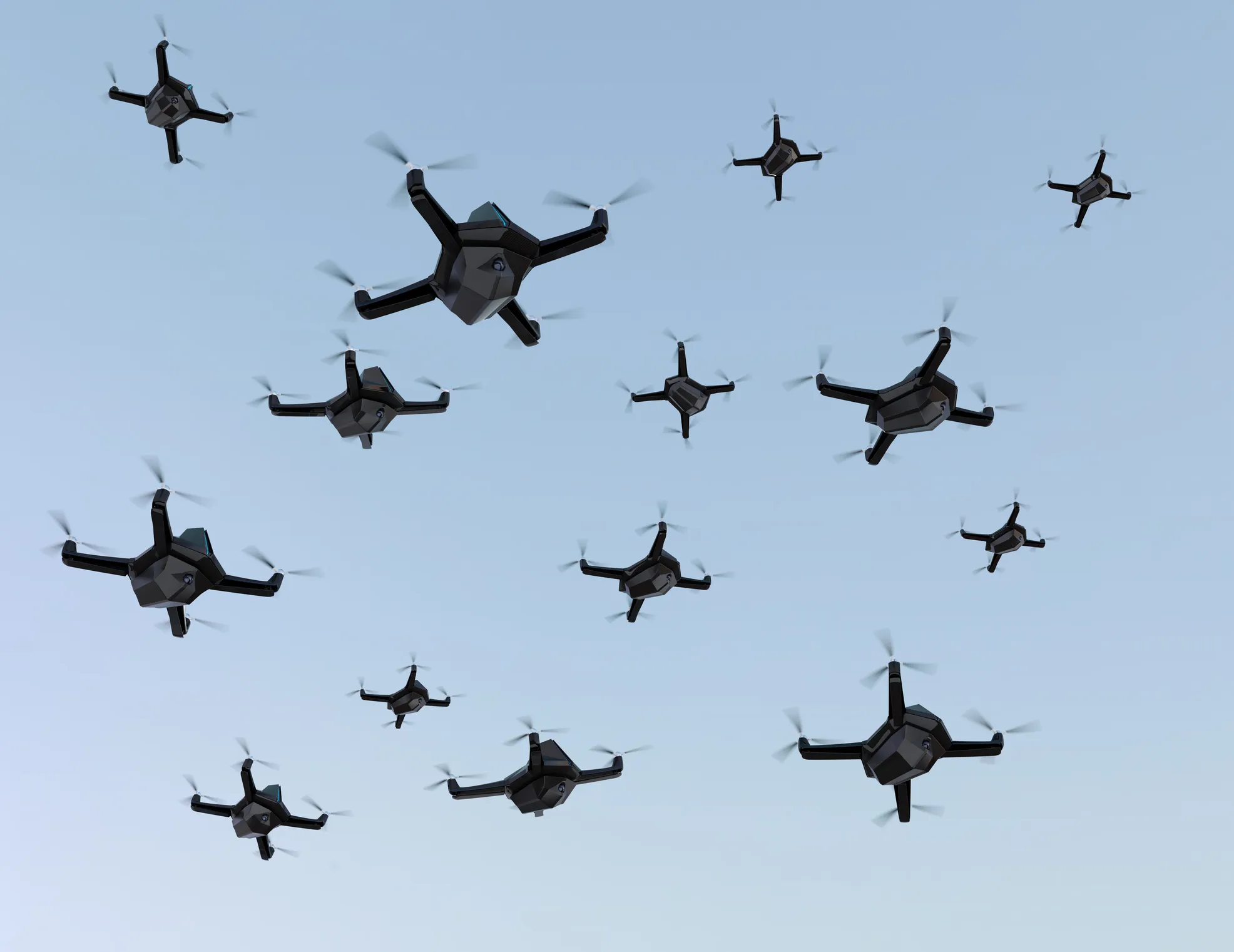
Today, aerospace engineering in Philadelphia has transitioned from heavy manufacturing floors into the domain of algorithms and microprocessors. The epicenter of this modern revolution is the GRASP Lab at the University of Pennsylvania.
Under the leadership of Dr. Vijay Kumar, the laboratory transformed robotics by training multirotor UAVs to fly autonomously, without GPS or human intervention.
GRASP engineers were the first in the world to demonstrate:
- autonomous navigation — quadcopters rely solely on onboard cameras and laser rangefinders to build real-time 3D maps of their surroundings, instantly maneuvering around obstacles;
- cooperative behavior — robots dynamically organize into highly coordinated “swarms.”
Thanks to decentralized control algorithms, hundreds of drones can fly in tight formations, navigate narrow passages, and jointly transport heavy loads, operating as a single unified organism.
Meanwhile, Piasecki’s historical legacy endures through the Piasecki Aircraft Corporation in Essington, Pennsylvania, which currently develops conceptual heavy-lift unmanned VTOL platforms, such as the ARES project for the U.S. Army.
The Vertical Dimension of Philadelphia: An Evolution that Redefined Aerodynamics
The defining characteristic of the Philadelphia aviation school lies in its unique ability to translate daring theoretical concepts into reliable industrial standards. This region fostered a profound shift from a flat, linear understanding of transport logistics to complete three-dimensional freedom. The local ecosystem proved to be an unmatched incubator for ideas that pushed rotary-wing aviation rapidly forward, moving from fragile experimental prototypes to heavy-lift aerial systems capable of performing in the most demanding environments.
Today, the region’s aerospace cluster continues to build on this decades-old foundation, where each new design relies on a legacy of uncompromising stabilization and intelligent lift distribution. The work of these local inventors proves that genuine technological breakthroughs do not come from simply copying existing models, but from a willingness to completely rethink how mechanics interact with airflow.
Philadelphia firmly maintains its role as an influential engineering hub, defining the path of global aviation and training the aircraft of tomorrow to master the skies with precision.
