Philadelphia has many remarkable buildings that are powerful not only in terms of quality but also beauty. Such works of engineering art become a visiting card of the settlement in the camera gallery of tourists. However, the memory of the latter will not exactly capture the founder of the building. Very often, the glory goes by the wayside and the contribution itself leaves them in the shadow of the success of their own creation. Read more about the story of a prominent engineer from Philadelphia at philadelphia.name.
Childhood and first successes in engineering
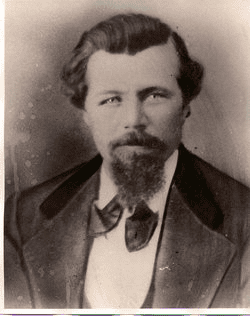
Charles Ellet Jr. was born on January 1, 1810, near the City of Brotherly Love. His family tree is very interesting because on his father’s side, he is a descendant of one of the politicians of the American Revolutionary War, Samuel Carpenter. On his mother’s side, he inherited Jewish roots. In the family, Charles was the 6th child out of fourteen born.
He was educated at Bristol School, after which he worked at a television company, where he made special drawings for his colleagues’ work.
Over time, he realized what he was good at and got a job as an assistant engineer. Despite this, he suddenly decided to quit his job to study in France. There, he mastered the knowledge of civil engineering. At the same time, he liked to describe his thoughts on paper, which was mostly his specialization. These skills later helped him publish his own books about engineering.
After returning from the European continent to the New World, he earned his living working on the railroad. In the eighteenth century, Charles personally asked local officials to pay attention to the importance of a ferry crossing the Potomac River. Despite being ignored by officials and refusing to finance the engineer’s project, he found investors on his own and built a portable bridge in Philadelphia. At that time, there was no such large-scale structure in America that could move and exceed three hundred and fifty-eight feet long.
Engineering activities
With the first success, Ellet’s reputation began to change. Now the governors of other cities with rivers and logistical problems are asking the engineer for help. At that time, he was also remembered for the construction of the record-breaking Wheeling Suspension Bridge over the Ohio River in the neighboring state of Pennsylvania. Of course, the ferry bridge over Niagara Falls, which became a debut in the history of engineering structures.
Charles Ellet’s work helped to improve the shape of the New Orleans embankment. His study of the US river system led to the conclusion that artificial embankments increase the likelihood of flooding in regions. These theories were heavily debated for more than a millennium, but in the future it turned out that the statements of the Philadelphia engineer were true. The researcher’s followers then used Charles’s books to eliminate man-made and natural disasters.
Ellet’s ram flotilla
At the end of the nineteenth century, a terrible accident occurred at sea, as a result of which a two hundred and fifty-ton ship called the Vesta hit the 2,794-ton Arctic unexpectedly and sank it. Even before the tragedy, Charles Ellet Jr. was researching the theory that steam propulsion was the future of the navy, as it increased the ramming power of the ship.
The story of the large ferry bridge projects repeated itself with the idea of creating a ram fleet, but the US Navy leadership did not support the engineer. Therefore, the American offered his services to the Russians, who at that time were conducting another intervention on the Crimean Peninsula. The Russian government was interested in his proposal, but the plans were canceled after the then-czar of the empire was assassinated.
Subsequently, the Philadelphian tried to attract the attention of American society to reach the President of the United States of America himself, which, in fact, he did. Abraham Lincoln wrote a letter to Charles Ellet Jr. to negotiate with the army generals, who still despised the engineer because of his arrogance.
During the American Revolution, the fighting took place on the water, where Confederate warships of the ram type sank the flagships of the US Navy of the time. Against this backdrop, Charles further promoted his developments until the Americans lost all their ships and ports. The only one who believed in the Philadelphia native’s idea was Secretary of War Edwin Stanton, who had once helped Ellet establish new railroads, bridges, etc. With a bit of luck, he eventually gets a position that facilitates the project.
In his debut battle, the Philadelphian’s ramming ships got away with it in the Battle of Memphis on the Mississippi River. The Confederate fleet went down, but the engineer did not have time to celebrate because of the injury he received during the fighting.
The hospital had to cut off the damaged limb to save his life, but the patient did not want to remain with bodily limitations. For fifteen days, he endured severe pain, and then died as a result of blood poisoning.
Charles Ellet Jr. was buried in his native country. The funeral was attended by well-known American generals and politicians, as well as ordinary people and admirers. After the funeral, Alfred Ellet took charge of his late brother’s ram fleet. Furthermore, the then management decided to name one vessel in honor of the heroic Ellet family – “USS Ellet”, the latter helped the US Navy during World War II.