

Philadelphia native Paul McNally was a true Renaissance man, keenly interested in both science and religion. He held administrative positions and participated in scientific expeditions, leading a rich and fulfilling life in every sphere. His legacy lives on, with a lunar crater bearing his name. Read on at philadelphia.name for more about the remarkable life of this extraordinary individual.
Early Life and Education
Paul was born in Philadelphia on October 14, 1890, one of seven children to Charles and Martha McNally. While it’s not definitively known if his family was particularly religious, in 1908, the young man became a member of the Society of Jesus. He then enrolled at Woodstock College, embarking on a scholarly path. He earned his Bachelor of Arts degree in 1915, followed by a Master of Arts two years later.
Paul was drawn to the exact sciences. By 1916, he began teaching mathematics at Boston College, a position he held until 1920. His activities during this period were quite diverse, including:
- In 1916, he organized and coached the Boston College Eagles men’s basketball team with student Paul Gately.
- From 1917-1918, he moderated the Fulton Debating Society.
- In 1919-1920, he taught German.
Afterward, McNally moved to Fordham University, where he also taught mathematics and oversaw the debate club. He earned his Ph.D. in Astronomy there in 1921.
Concurrently, he was ordained into the priesthood at Woodstock College in 1923, and two years later, he earned a Doctorate in Sacred Theology from the Pontifical Gregorian University. Thus, by the age of 35, McNally was both a scientist and a priest, though he chose to primarily pursue science, specifically astronomy.
Georgetown Observatory
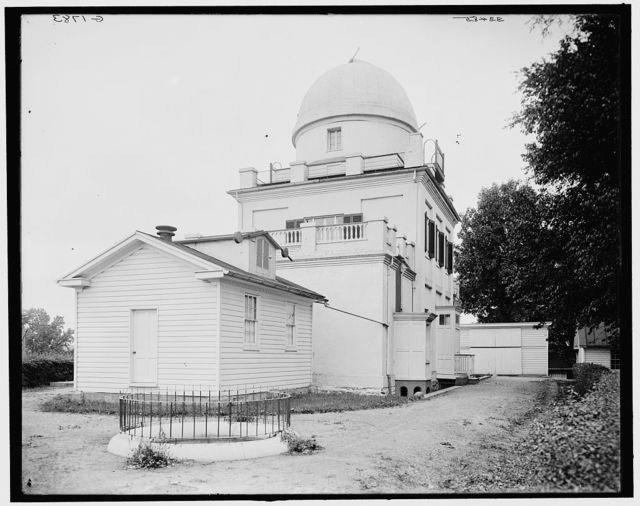
In 1925, Paul was invited to serve as Assistant Director at the Georgetown Observatory. Three years later, he became the director of the institution, and in 1929, he was inducted into the Royal Astronomical Society. His subsequent scientific path was primarily linked to astronomy.
At the time, the observatory’s equipment was fairly basic. Nevertheless, it allowed for observing solar eclipses and searching for Herschel’s fields. For this, McNally used a 12-inch equatorial visual refractor. Later, the observatory was equipped with two 3-inch Ross-type astrographic cameras, enabling more detailed and in-depth studies of the Sun.
It was McNally who managed to capture high-quality images of a total solar eclipse in 1932 in Fryeburg, Maine. The London Photographic Society recognized this work at its annual meeting. Furthermore, when the National Geographic Society organized expeditions to film and research solar eclipses, they included the Philadelphia astronomer. Paul traveled on such expeditions to Siberia in 1936, Canton Island a year later, and Brazil in 1940.
When World War II began, McNally coordinated communication and collaboration between Georgetown University’s scientific departments and the United States government. This successful work led to his appointment as a fundraiser for the establishment of a new university hospital at Georgetown. This marked the beginning of his subsequent administrative career.
Administrative Work and Later Life
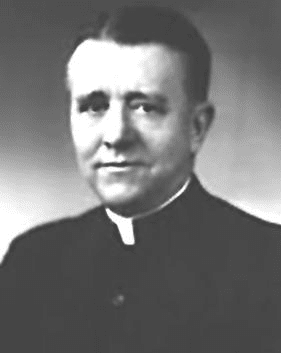
McNally became Vice President of Georgetown University in 1942. In 1946, he was appointed Dean and Regent of the Medical School at the institution, and soon after, he took charge of the newly established medical center, a project he had overseen in previous years.
Thus, the final ten years of the scientist’s and priest’s life were dedicated to administrative work. From the heavens and stars, Paul McNally returned to organizational endeavors, at which he also excelled.
In 1952, he was diagnosed with coronary artery disease. Soon after, he suffered his first myocardial infarction. At that point, Paul decided to step down as Dean. Instead, he became the head of Georgetown University’s Physics Department. In this role, he initiated a project to establish a graduate program in physics. However, he was unable to complete it. He passed away on March 4, 1955.
Throughout his 64 years of life, Paul McNally managed to contribute significantly to the development of national science and education. He was interested in religion and mathematics, physics and astronomy, as well as administrative activities and the training of future generations of young scientists.
A crater on the Moon was named in his honor. Craters, or circular depressions, are likely the result of impacts on the Moon’s surface and are often named after famous scientists and other notable figures. One of them bears the name McNally. This crater is located on the far side of the Moon, northwest of the large Fersman crater. It has rounded edges and differs somewhat from other craters.
So, Paul McNally’s memory lives on through the continued development of his projects. This distinguished Philadelphian made important contributions to science and lived a fascinating life, following his interests and dreams.