

Few people realize that the era of mass penicillin production and its triumph during World War II are closely linked to the city of Philadelphia and the state of Pennsylvania. This region, already home to a robust pharmaceutical cluster, was transformed into a strategic base where the scientific dream of an antibiotic finally became an industrial reality. Philadelphia, with its research centers and manufacturing capabilities, played a defining role in providing Allied troops with the “magic bullet.” You can read more about this at philadelphia.name.
The Start of the American Breakthrough
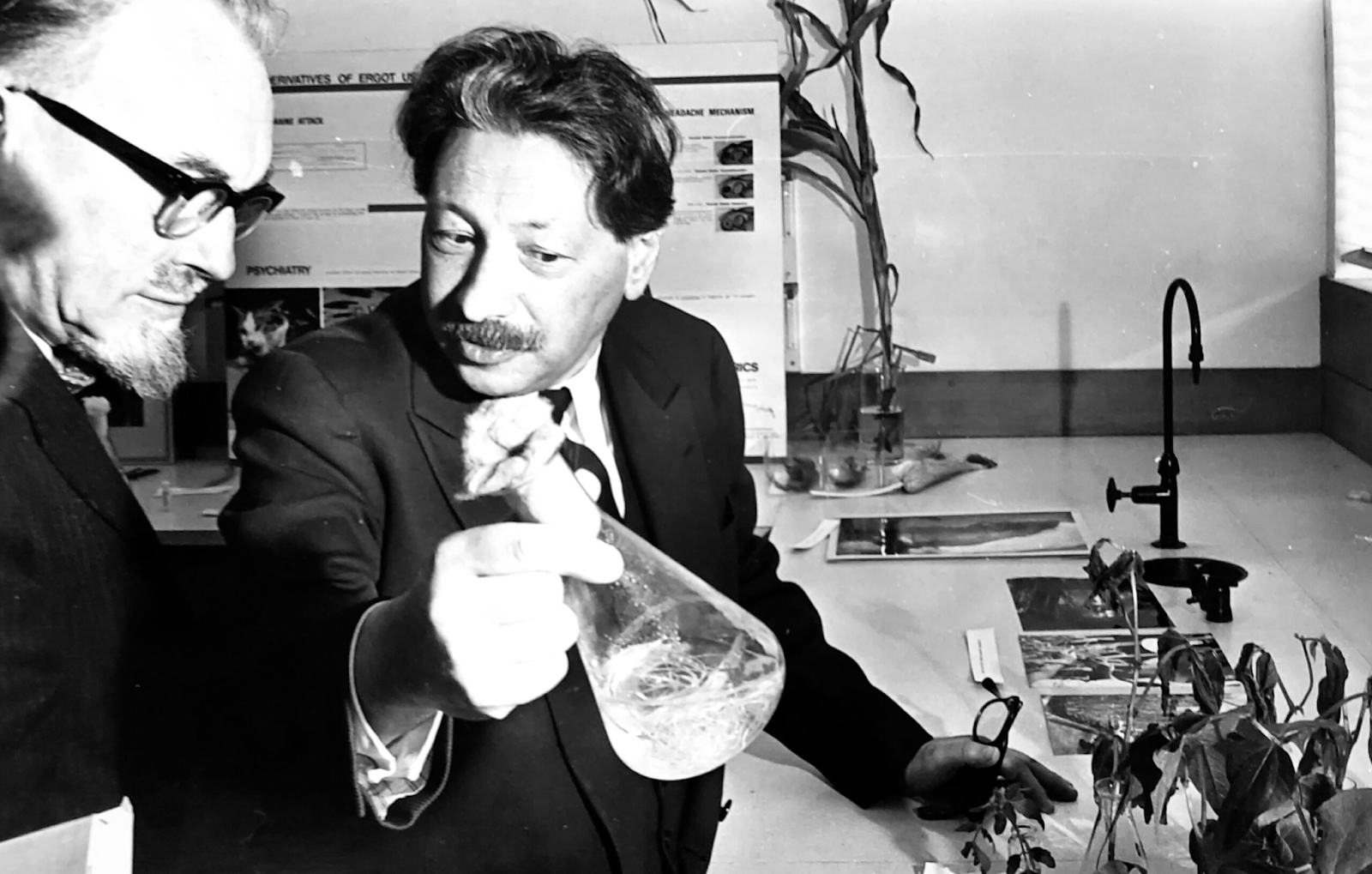
After British scientists Howard Florey and Ernst Chain proved the clinical effectiveness of penicillin, they faced a critical issue: production capacity. In 1941, with Great Britain exhausted by the war, Florey made a crucially important visit to the United States.
His journey led him to American biotechnology hubs. Among his key contacts was Alfred Richards, vice president of the School of Medicine at the University of Pennsylvania in Philadelphia. This meeting and the subsequent support from local scientific circles served as the bridge that carried the laboratory discovery to American industry, which possessed the necessary financial and manufacturing resources.
The Pharmaceutical Cluster
Philadelphia had long held the status of one of the largest centers of the U.S. pharmaceutical industry. This powerful foundation ensured a rapid response to military needs. Local companies like Wyeth Laboratories, along with neighboring giants such as Merck in New Jersey, which is close to Philadelphia, quickly joined a government initiative for the mass production of the life-saving antibiotic.
A key factor ensuring success was direct intervention and coordination from the government. The U.S. government established the so-called “Penicillin Committee.”
This was an unprecedented move, as the board had a single objective: to facilitate the open exchange of knowledge and technology among competing companies. Normally, production secrets were fiercely guarded, but for the sake of victory, private interests were set aside.
This allowed Philadelphia and neighboring companies to:
- Quickly adapt their production lines for the new, highly complex process of deep-tank penicillin cultivation.
- Avoid duplicating research and development.
In essence, a division of labor took place between the two allies. The U.S. government took over the funding, scaling, and coordination of industrial production. British scientists Florey and Chain, who brought the knowledge to the U.S. due to the war, transferred the fundamental know-how and research samples to American companies. This cooperation transformed penicillin from a laboratory curiosity into an industrial lifeline.
Innovation from the Basement
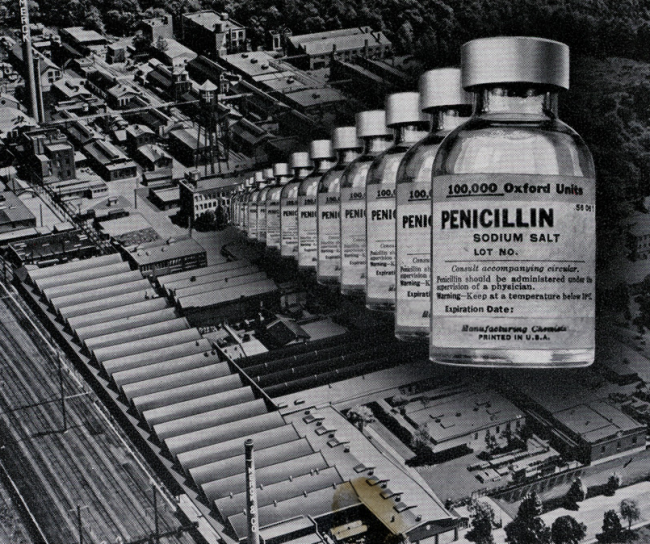
In the early stages, purified penicillin was expensive because it was obtained by a rudimentary surface method in small containers. The Philadelphia region and adjacent research centers played a key role in implementing deep-tank fermentation.
The essence of the innovation was growing the Penicillium mold in huge steel tanks (fermenters), where the fungus was constantly supplied with oxygen. This method allowed for:
- Increasing the yield of the curative substance hundreds of times over.
- Ensuring the sterility of the process on a large scale.
- Significantly reducing the final cost of the product for military needs.
This industrial breakthrough, largely due to the cooperation of pharmaceutical companies in the Mid-Atlantic region, made the supply of the antibiotic to the front line possible.
The “Magic Drug” for the Allies
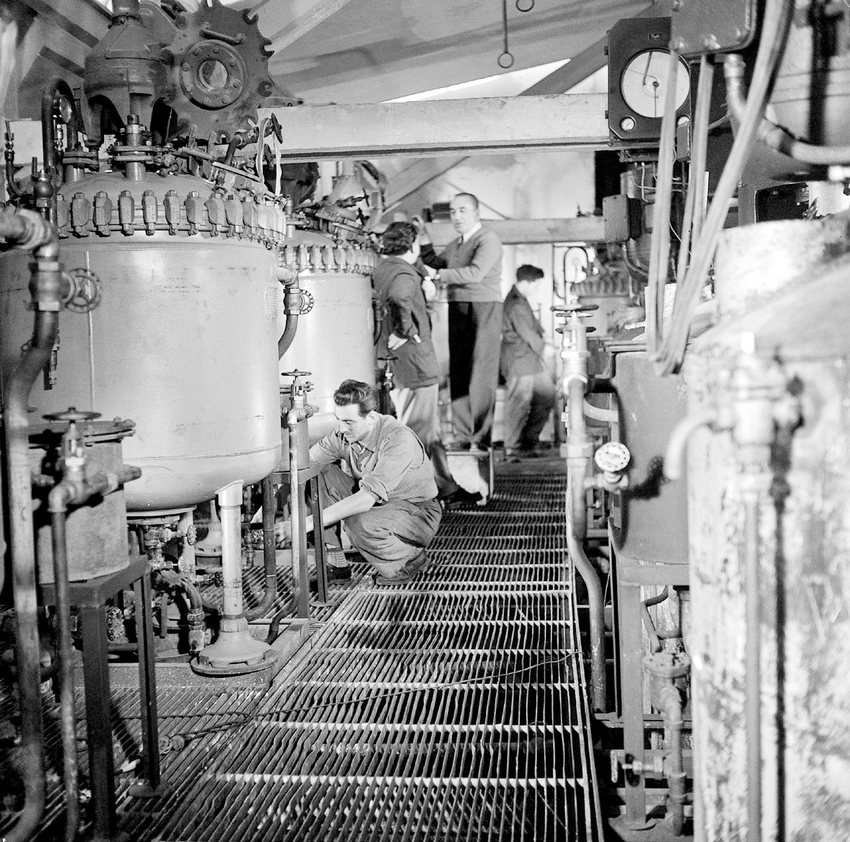
By mid-1944, the time of the D-Day landings in Normandy, Philadelphia and its partners were already producing tons of penicillin. At that time, almost the entire quantity produced was designated exclusively for military purposes. Every Allied medic’s kit contained the drug.
The result was astonishing: in previous military conflicts, infections caused by wound contamination were the main reason for fatalities, but now, thanks to the antibiotic, mortality from such complications dropped sharply. Penicillin allowed doctors to save soldiers with severe injuries that were previously considered fatal.
Global Recognition
After the cessation of hostilities on the fronts of World War II, the American pharmaceutical industry, which had amassed colossal experience and production capacity, quickly reoriented itself. The regional cluster, centered around Philadelphia and New Jersey, began the large-scale commercial release of penicillin.
As a result, the drug, which had been a strategic military resource just a few years earlier, became available to the public. This moment initiated the antibiotic era, fundamentally changing medical practice worldwide. For the first time in history, a reliable means became available to combat bacterial infections, which had previously been considered a death sentence.
The Nobel Prize in Physiology or Medicine in 1945 was well deservedly awarded to the discoverers: Alexander Fleming, who first discovered penicillin, and Howard Florey and Ernst Chain, who developed methods for its purification and application.
However, their epoch-making scientific success would have been impossible without another, equally important factor: the manufacturing capabilities in Philadelphia and the unprecedented cooperation between science, business, and government that was established during that critical period. It was this industrial coordination that transformed a scientific discovery into medication available to millions.
