

The magnificent views of Philadelphia and the surrounding area captivate tourists and locals alike. Every day, a large number of visitors come to various parks to enjoy the peaceful atmosphere of nature. One of such places is Chanticleer Garden. It is full of harmonious secret oddities and sculptures that can be easily found on the site. Find out more at philadelphia.name.
How did the Chanticleer Garden come about?
There was previously a large lawn on the site of the present-day garden, on which one wealthy family decided to build their house. The Chanticleer estate was constructed in 1912. It was designed as a summer home for Christine Penrose and Adolph G. Rosengarten, Sr. They were very wealthy people who owned the Philadelphia company Rosengarten & Sons, a pharmaceutical manufacturing company based in Philadelphia. The family planned to visit their new residence during the summer since the area was ideal for it, and there were many similar homes along the Pennsylvania Railroad where people hid from the heat.
To design and construct the Rosengarten family estate, they hired architect Charles L. Borie, who turned out to be a friend of the family. His task was to create the house in the Colonial Revival style. The family, along with other locals, saw the finished building in 1913. However, the job did not end there. Later, landscape architect Thomas Sears was employed by the Rosengartens. He designed a terrace project that was intended to be an extension of the house. The laborious efforts made it possible for the Rosengarten family to convert their summer house into a year-round residence. As a result, the family moved to their new estate.
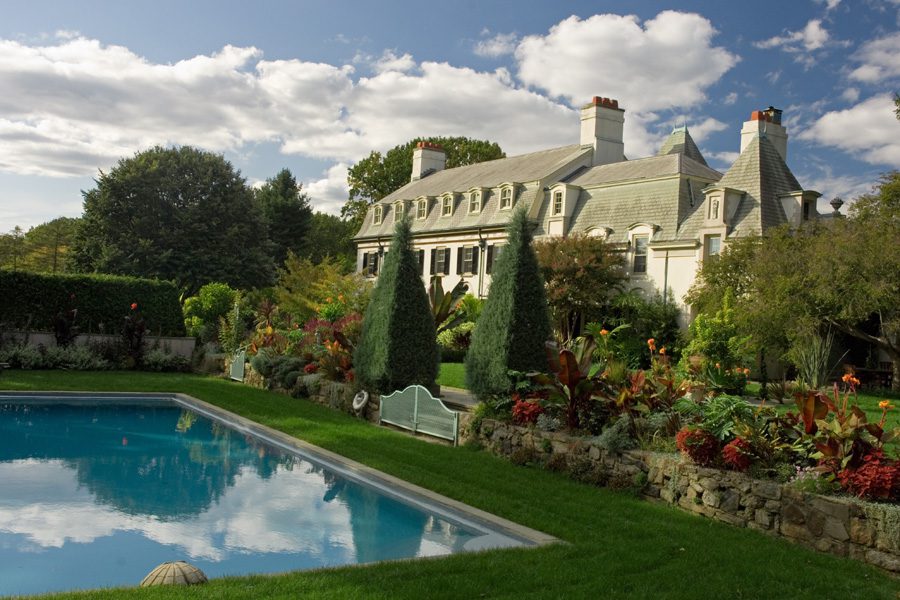
After building the estate, Adolph and Christine decided to build residences for their children as well. They were presented as wedding gifts. First, in 1933, the parents bought a house next to them, which became the home of their son Adolph, Jr. and his fiancee. In 1935, they constructed an estate for their daughter Emily.
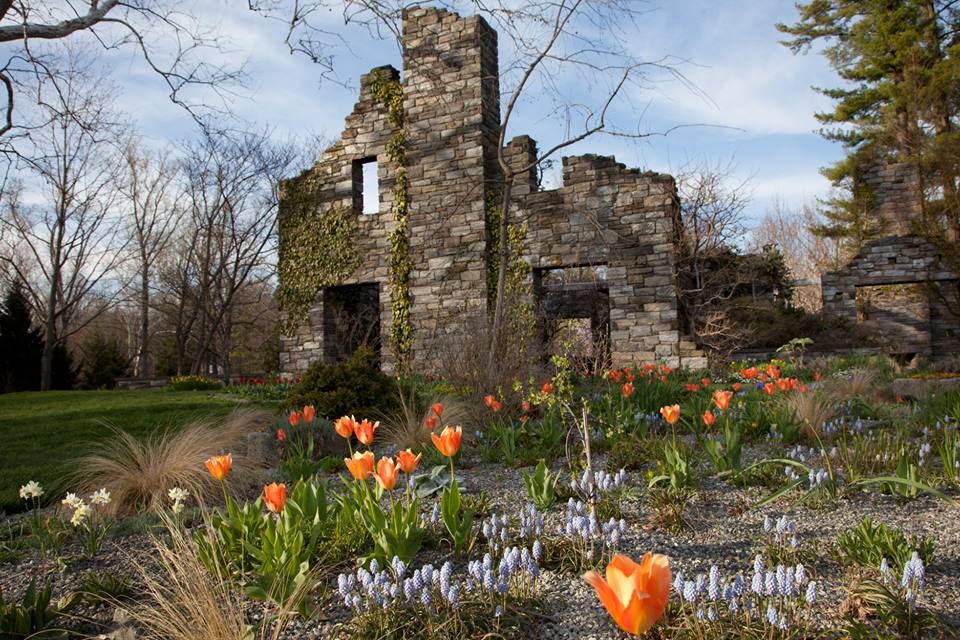
Although these houses have lost their original appearance in modern times, their outlines may still be seen in the park. After his sister died in the 1980s, Adolph, Jr. purchased part of her estate, which is now used as space for offices and classrooms. The man did not relocate to the main house, but instead utilized it solely for entertainment, attempting to retain it as it was when his entire family lived there. The house of Adolph, Jr. himself was demolished and turned into a place that later became known as “The Ruin”.
How did the estate become a garden?
In 1946, Adolph G. Rosengarten, Jr. inherited the family estate. After becoming the sole owner of such an area, he chose not to change anything about it or its surroundings. On the contrary, the man established a foundation with the goal of turning the Chanticleer estate into a public garden. Naturally, it was private property at first, but in 1993, visitors were allowed free access to the area.
Adolph, Jr. took the matter very seriously. To improve the appearance of the garden, he recruited British native Christopher Woods. He then became the founding executive director. Over the years, much work has been done on the property to ensure that the Chanticleer estate on the Philadelphia highway retains its home coziness. The 48-acre garden attracts visitors who want to relax, walk and picnic.
The man died in 1990, leaving all of his property for use in public education. The nine-member board of directors took charge of managing the money they got from the Rosengartens. Each piece of territory is supervised by 20 employees who also take care of facilities. Of course, the garden is looked after by talented gardeners who have extensive experience in plant care.
Diversity of park zones
The garden has a vast area and was added to the National Register of Historic Places in 1984. Here, everyone can feel the spirit of the past, all they need to do is take one step on the territory of the Rosengartens’ garden. Visitors can not only spend time walking on their own, but they also have the opportunity to go on seasonal excursions that take place from April to October.
Few people know that the French word “chanticleer” translates as “rooster”. This name was chosen by the owner, Adolph Sr., who had a great sense of humor. As a result, the family decided to take advantage of this, as each place should have its unique feature. The entrance gate of the estate is decorated with a stone-carved rooster. However, this is not the only bird exhibit located around the garden.
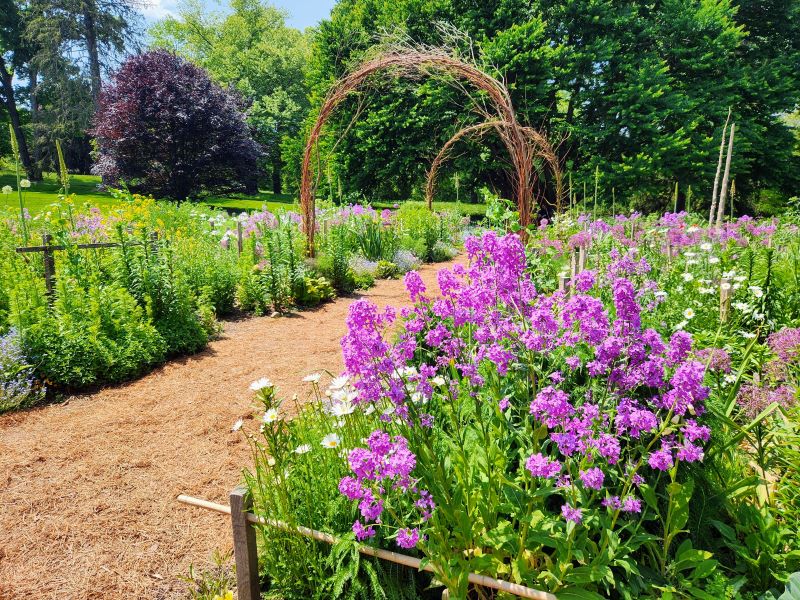
Visitors can also discover numerous other displays, all of which are very significant for the completeness of the territory design:
- The main attraction is, of course, the Chanticleer House itself. It connects to the entryway and tea garden, which features an open porch. This location is quite popular among tourists as everyone can sit and relax there.
- Asian Woods is an extensive planting site that appeared in 1995. First, the planting area was cleared in 1994, so that later various plant species could grow there. All greenery that has sprouted in Asian Woods originates from Korea, Japan and China, though the style of an American woodland garden has been kept.
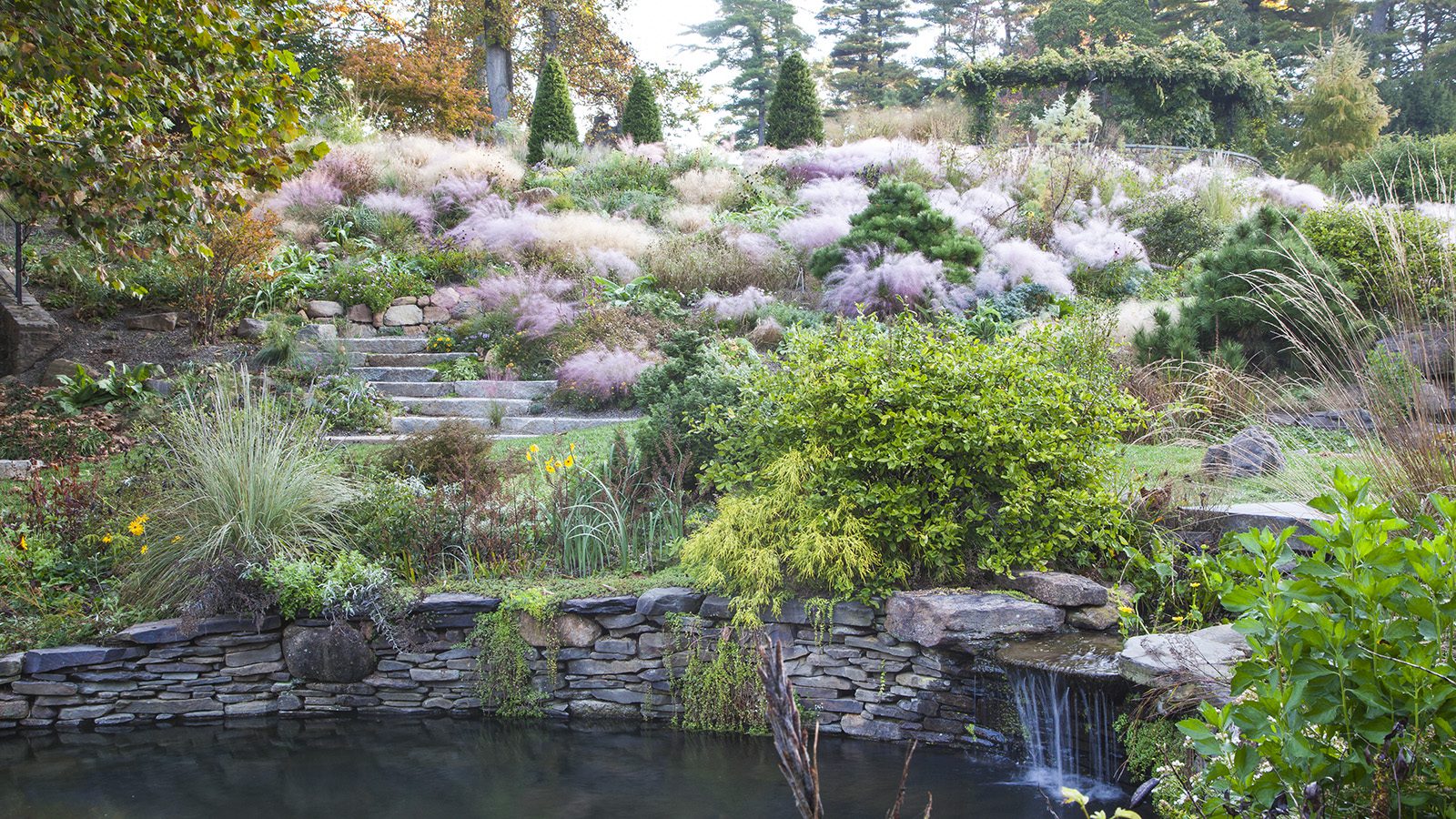
- Pond Garden is a large artificial round pond that first appeared in the early 1970s. It seems to reflect the trees that line the shore.
- Teacup Garden is a simple and small area that serves as the entrance courtyard to the main estate.
- Minder Woods is densely covered with red oaks, dark green pines, firs, false cypresses and hemlocks. But its most fascinating feature is the path to the area, which is paved with meandering stone paths.
- Tennis Court Garden is an old family tennis court. However, it was converted into a garden so that it would match the style of the rest of the territory.
- “The Ruin” Garden is the home of Adolph Jr., which was demolished in 1999 and embellished with fountains and swimming pools.
- Gravel Garden is a fairly small area connected by steps that features a variety of plant species. They are rare in this region and climate.
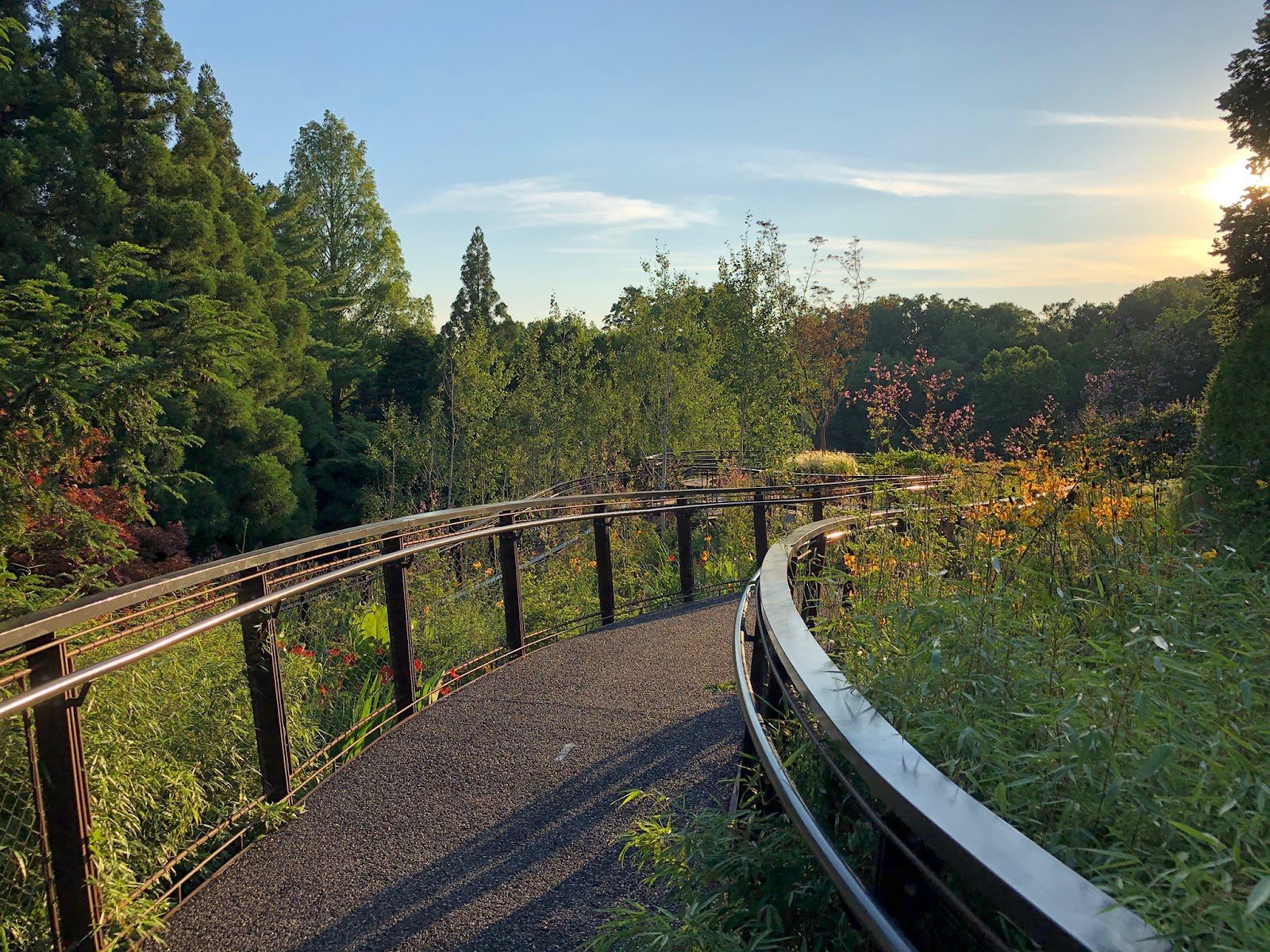
The entire garden is connected by winding paths that can lead guests anywhere, from the orchard to the pond. Each piece of territory has its own theme, which is a quite rare concept.
Park architecture
If ordinary plants are not interesting enough and you want to experience something new, Chanticleer can offer this as well. Its land is home to a number of works of art. There is a stone and wood drinking fountain situated near the forest park. It pumps water, directing its streams to the beds and everything behind them.
In “The Ruin” Garden, there is an extraordinary pool where marble faces emerge, washed by streams of water. Next to it are a full-sized sofa and armchair, though it is crafted of masonry. On the armrest, the visitor can find a remote control with bright gem buttons. However, there is no television, instead, there is nature, which everyone can enjoy to the fullest.
Benches and chairs are positioned randomly throughout the garden, they can occasionally be found in the most strange places, yet everything in the garden is rather non-trivial. Chanticleer is a delightful place to visit since there is always something new to discover. The most important thing is that you can enjoy the moment while being surrounded by beautiful nature.