

Across the globe, nations are uniting to tackle climate change and lessen humanity’s impact on the planet. Most countries are committing to slash harmful emissions that fuel the greenhouse effect, alongside launching countless other initiatives to meet this crucial goal. Find out more at philadelphia.name.
Philadelphia’s leaders have set an ambitious target: to achieve net-zero climate pollution by 2050. The city council has already taken significant steps, and the city continues to push forward. Let’s dive deeper into Philadelphia’s climate preservation strategy.
Emission Reductions: Plans Versus Reality
As of 2024, Philadelphia has implemented the following measures to reduce harmful industrial and private sector emissions:
- A solar power plant was built to provide electricity for roughly a quarter of the city’s buildings.
- A program to replace old gasoline-powered vehicles with electric cars was launched.
- The city began replacing conventional streetlights with energy-efficient LED versions.
- Projects were initiated to boost energy efficiency in administrative buildings.
The city also has major plans for greening the city and improving street conditions, including adding bike and pedestrian paths where they’re currently missing. Furthermore, officials aim to engage as many commercial buildings as possible in energy-efficient projects.
However, specialists from the Philadelphia Energy Authority believe these changes aren’t enough. While they will certainly help reduce harmful waste, the process is moving slowly and is unlikely to be completed by 2050.
Home Repairs and Moving Away From Natural Gas
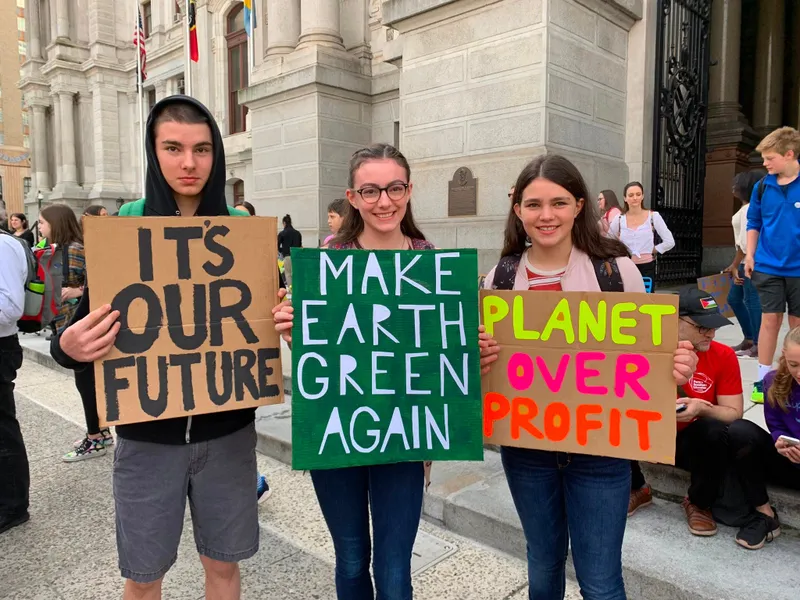
Shomari Pitts, co-director of the environmental justice advocacy group Philly Thrive, insists that the city needs legislative changes regarding climate issues. Along with other activists, Pitts appealed to the city council, proposing local funding for a program to repair homes, protect them from adverse weather, and encourage solar energy adoption.
Activists argue that many homes in Philadelphia need repairs. If owners received funding, they could boost energy efficiency and switch away from fossil fuels.
It’s worth noting that the vast majority of residential buildings in Philadelphia are heated by natural gas, supplied by the city’s gas company, Philadelphia Gas Works. At the same time, a significant portion of carbon emissions is also linked to industrial activity.
Experts are urging the city council to ban the approval of large construction projects that propose using fossil fuels for heating. Instead, housing management projects should meet climate standards, and developers must report on reducing emissions related to building materials.
In response to the activists’ appeal, the Legislative Oversight Committee promised to hold hearings on Philadelphia’s progress toward carbon neutrality and involve more commercial organizations. For instance, Vicinity Energy, one of Philadelphia’s most significant polluters, has already joined this effort, committing to achieve net-zero emissions by 2030. While this plan might seem overly optimistic, it also motivates other industrial and business players to take action.
Of course, legislative changes are crucial tools for regulating climate issues. However, a higher level of business awareness and a desire to make Philadelphia a green city by 2050 are even stronger motivators.
Can the City Reach Carbon Neutrality by 2050 or Sooner?
City council members have stated their aim for net-zero carbon emissions by 2050. However, climate activists believe it needs to happen at least a decade earlier. Philadelphia residents are already feeling the full effects of global warming. Summers have become significantly hotter, severe wildfires are frequent, and heavy rains and floods cause numerous problems. According to Shomari Pitts, action is needed immediately; there’s no time to wait until 2050.
Liz Lankenau, interim director of the city’s Office of Sustainability, isn’t confident Philadelphia can achieve net-zero emissions by 2040. Still, government funding for these issues is currently quite high, as are the potential actions that can improve the situation. Lankenau noted that many buildings are implementing energy efficiency systems, highlighting that every resident’s efforts contribute to the greater good.
Residents are encouraged to adopt energy-efficient practices, such as installing solar panels, choosing bikes over cars, sorting waste, and participating in other environmental protection initiatives. After all, it is through collective action that climate change can be slowed down.