Frances Spence is an outstanding mathematician who is remembered for her contribution to the development of the digital computer. The woman developed her career in times of gender stereotypes. Despite all the difficulties, she succeeded. Read more about the life story of the scientist, her path to success and why the American leadership did not want to recognize her work on philadelphia.name.
What did she do before the scientific activity?
On March 2, 1922, a future scientist was born in the City of Brotherly Love. The fifth girl in a family of educators also studied very actively at school. She even entered the local college for free tuition.
She graduated from the Philadelphia educational institution during the war period. Despite the challenges of time, she obtained a diploma at the Faculty of Physics and Mathematics. Then, she fulfilled her and her parents’ dream and started to work as a teacher. At a local educational institution, Frances taught the younger generation the basics of mathematics and physics. Once after work, she accidentally met her former friend and fellow student, Kathleen Antonelli. At that time, the teacher did not yet know how exactly this meeting would radically change her life and career.
What did Frances Spence become famous for?
After the end of the Second World War, the leadership of the United States of America continued to develop its military forces. The best scientists from America and other countries were involved. As for the Americans, or, to be more precise, the American women, somehow six programmers were chosen to calculate the trajectory of ballistic missiles.
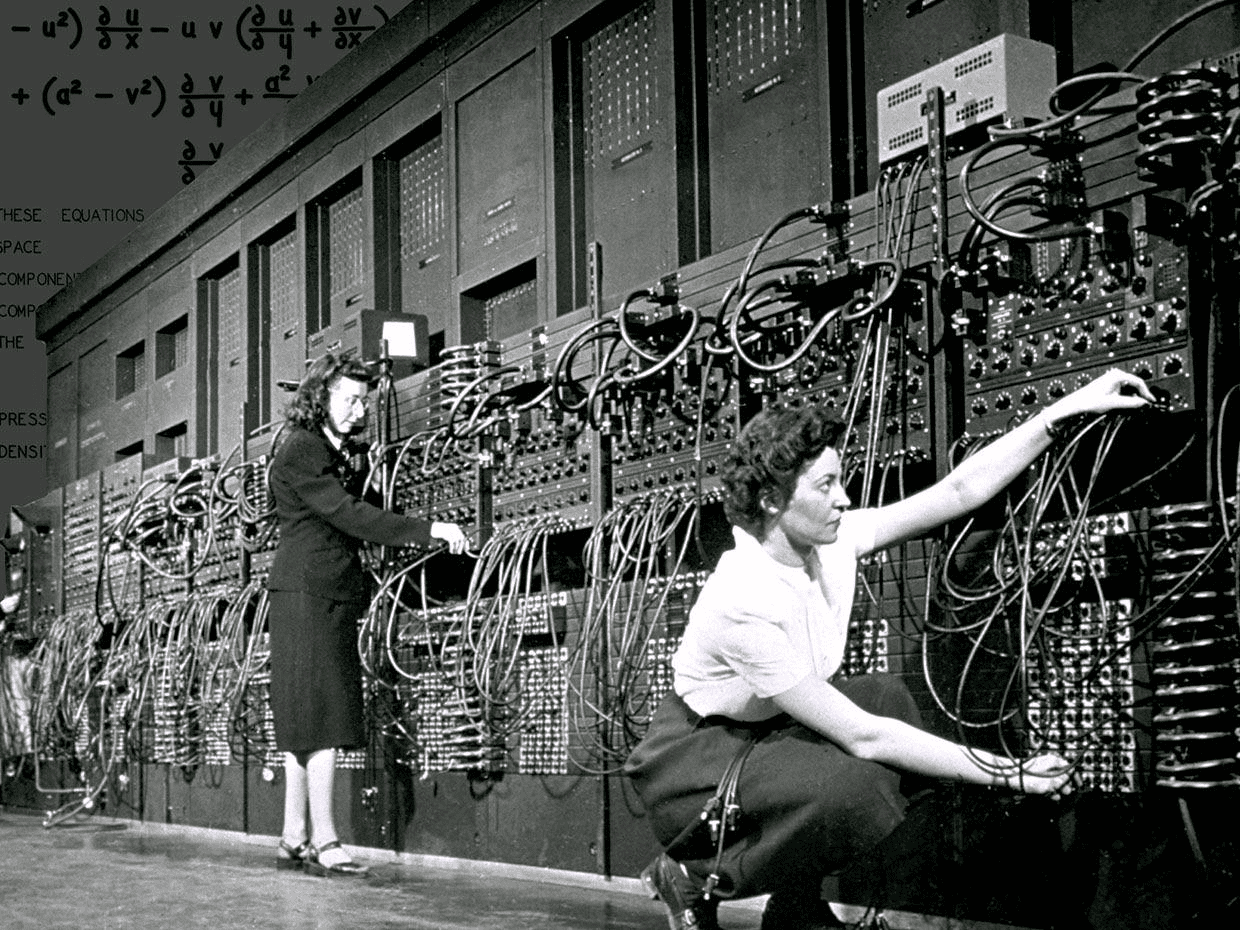
A mathematics teacher from one of the Philadelphia schools also appeared on that list. Because of the low salary, she quickly agreed to the offer of an old friend and joined a monetary project for programmers. Kathleen and Frances were engaged in calculating complex differential equations on paper, without the use of mathematical instruments.
Later, it appeared that this program was paid for by the US Department of Defense. The goal of the founders was to find people who would create the first all-electronic digital computer for military operations. Of the eighty women, Kathleen Antonelli, Frances Spence and four other girls were left.
That competition organized by the American army influenced the further formation of a new profession. Nowadays we know it as programming.
In those days, there were many myths about women in the army, and in general, they were not allowed to participate in such important projects. There were only a few women among scientists due to the aforementioned gender stereotypes. However, the story of the Philadelphia mathematician shows how she achieved incredible success, despite this problem. Thanks to Frances, the debut model of a digital computer was programmed. Her achievement opened the way for other women in science.
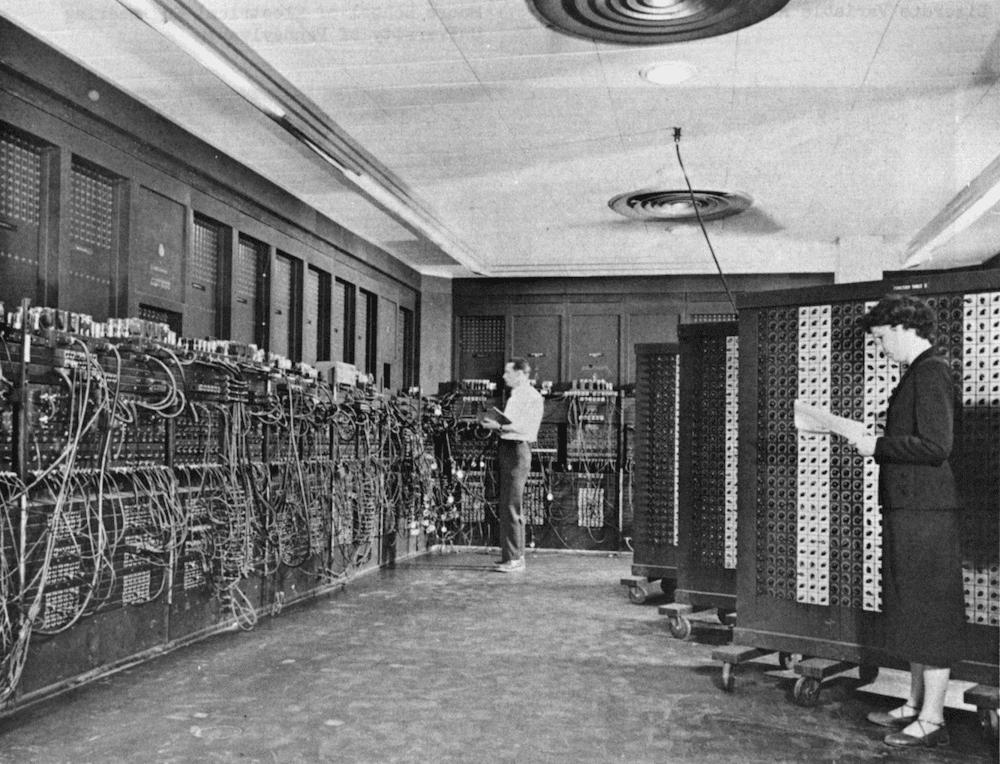
While working on ballistics trajectory studies, the proto-programmers encountered the problem of calculation using a differential analyzer. This device was eight feet high and eighty feet long.
The machine was called ENIAC and was not easy to understand and work with. There were no programming languages and compilers or even a computer manual. Everything was done from scratch with mistakes and following conclusions.
Despite these difficulties, the scientist and her colleagues coped with the task. ENIAC contributed to the calculation of ballistic trajectories.
Later, the public was informed about the secret study of the US Army but nothing was written in the newspapers about the contribution of the woman from Philadelphia and her colleagues. Some suggested that they tried to protect the six female programmers from trouble in the future because their innovation was vital for the country.
Despite the lack of proper gratitude for her hard work, the native of our city did not surrender. She continued her research and shared her experience with other colleagues.
Later, she met the love of her life, Homer Spence, who worked in the army as an electrical engineer at the Aberdeen Proving Grounds. She got acquainted with her future husband during another study on the ENIAC project. Homer had been promoted to head of computer research when he told Frances about it, adding that he wanted to marry her. The woman agreed. She resigned from the company, when the couple was expecting a baby.
Thanks to her hard work throughout her life, Frances earned more than three million dollars.
On July 18, 2012, Frances Spence died surrounded by her family in her native Philadelphia. She was ninety years old. Her work was publicly recognized during her lifetime. At the end of the nineties, the scientist was added to the Women in Technology International Hall of Fame. In 2010, a documentary called Top Secret Rosies: The Female “Computers” of WWII was released. The stories of female programmers who made a significant contribution to the programming of modern computers were described there.