

Every resident of Philadelphia knows this park. It is one of the five original existing open spaces in the city, which were planned by W. Penn and surveyor T. Holme back in the 17th century. Rittenhouse Square is known for its beauty, originality, architecture and sculptures. It is also one of the most popular vacation spots for natives and tourists. Read more on philadelphia.name.
From an area in the forest to a small park
Once upon a time, every square served as a burial ground for people to pay their respects to the dead. However, Rittenhouse was an exception to this list. Its territory served as a kind of dumping ground for human waste. Later, the 6-acre area was marked on the city plan. This was first done in 1682 by W. Penn, who was one of the main figures in early history and the founding father of the first capital of America.
The already mapped area was deep in a dense and large forest. This location of the future square remained for most of the eighteenth century. Later, the forest in which the future Rittenhouse was located, known as the Governor’s Forest, was cleared. This step was taken to make the area more spacious for later developments.
First steps to improve the park and changing the name
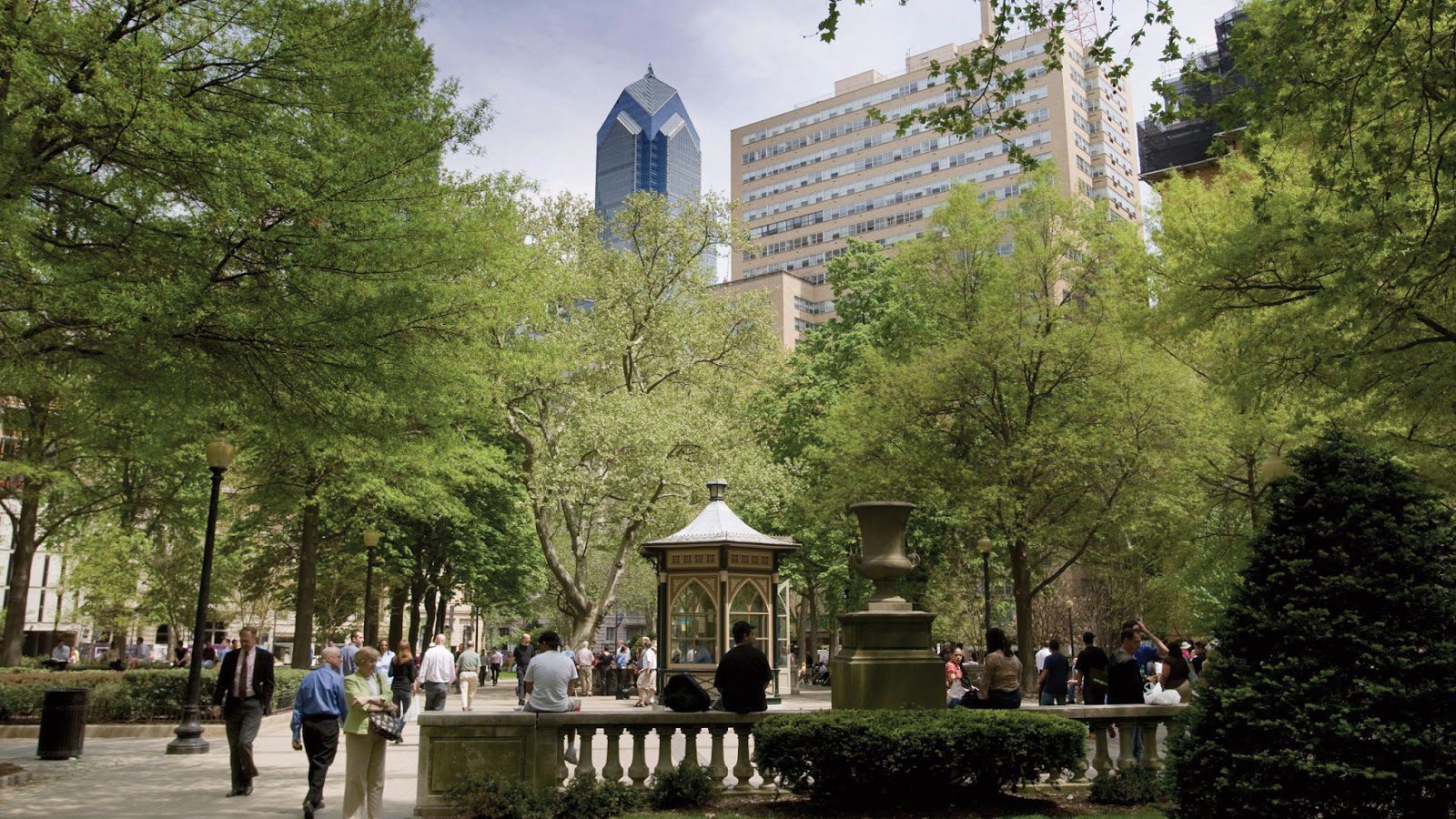
After the forest was cleared, the locals began to improve the park on their own. By the end of the eighteenth century, the area was surrounded by brick factories on all sides. Residents could have used the area to grow crops, but the local clay terrain was not suitable for such use. To prevent the park from being swallowed up by construction and to ensure that everyone could freely visit it for recreation, in 1816 the townspeople lent the city money to fence it off.
Initially, the square was known to everyone as Southwest Square. But in 1825, a proposal was made to change the name. The best candidate to name the park in Philly was D. Rittenhouse. He became famous as a brilliant astronomer, instrument maker, patriotic leader of the Revolutionary era and a descendant of the city’s first paper manufacturer.
Even before the Civil War, the park did not look like a small plot of grass. The square boasted beautiful and comfortable paths on the territory, a large number of trees under which every vacationer could hide on a hot summer day. A fashionable fountain was installed in the Rittenhouse, which was donated by local philanthropists. However, with the cool air next to it, which residents and tourists were exposed to, it created a large amount of dirt, which is why the authorities decided to dismantle it. But despite the minor inconveniences, at the end of the 19th century, Rittenhouse Square became the most prestigious residential area.
The growth of the city and the Rittenhouse Square neighborhood
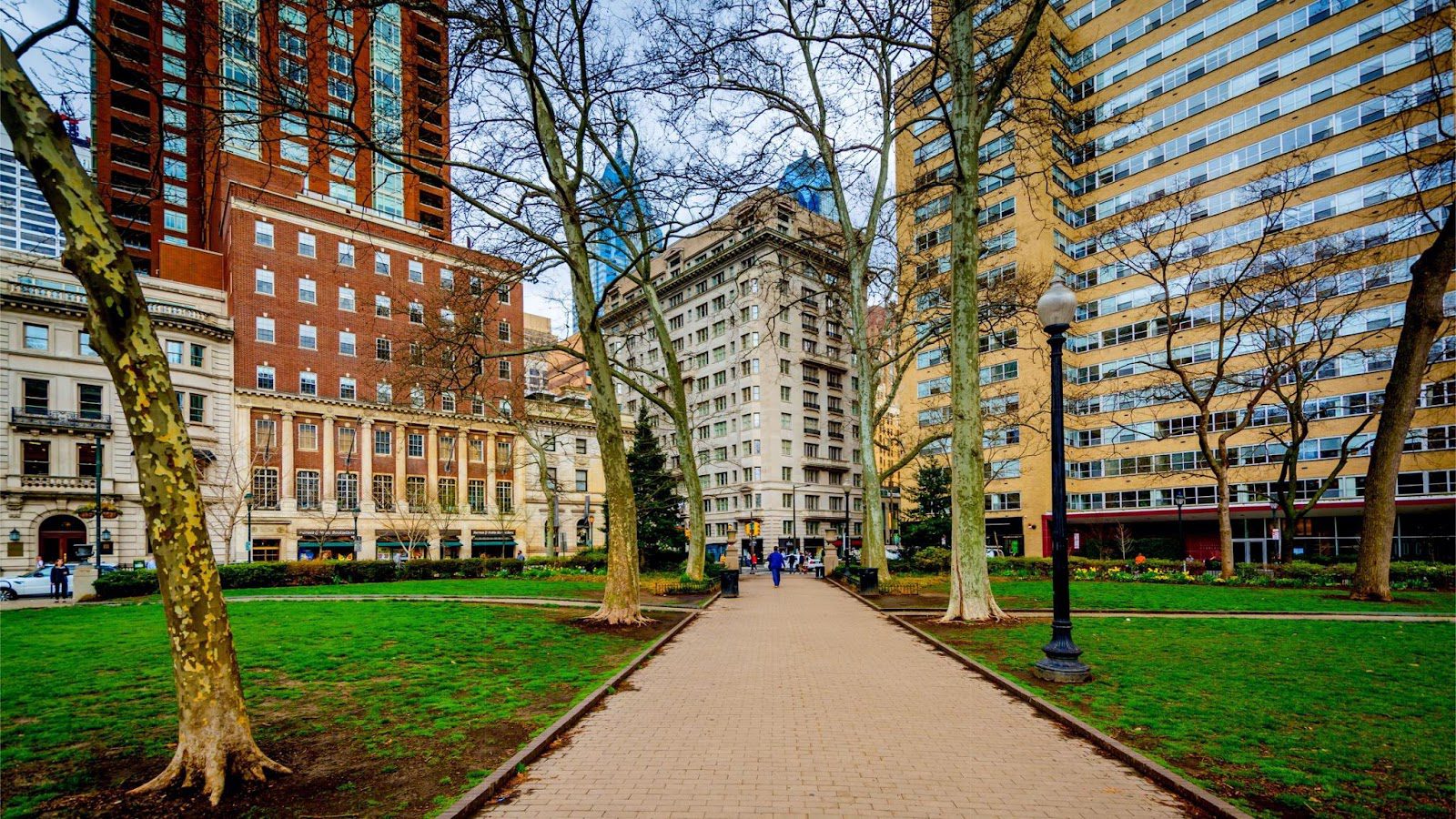
In the early nineteenth century, the city began to expand its territory. It grew from the Delaware River to the Schuylkill River. Gradually, it was realized that the area of the square would eventually become a desirable place. That’s why J. Harper, a merchant and brick manufacturer, was the first person to decide not to waste time and start building there. The man understood the value of the area, so he bought most of the northern facade.
Harper built a huge mansion for himself on Walnut Street. But he still had a lot of land at his disposal. He decided to divide it equally into generous plots for further development and sold it. After his death, his house was bought and later became the home of the exclusive Rittenhouse Club.
Buildings, architecture and life
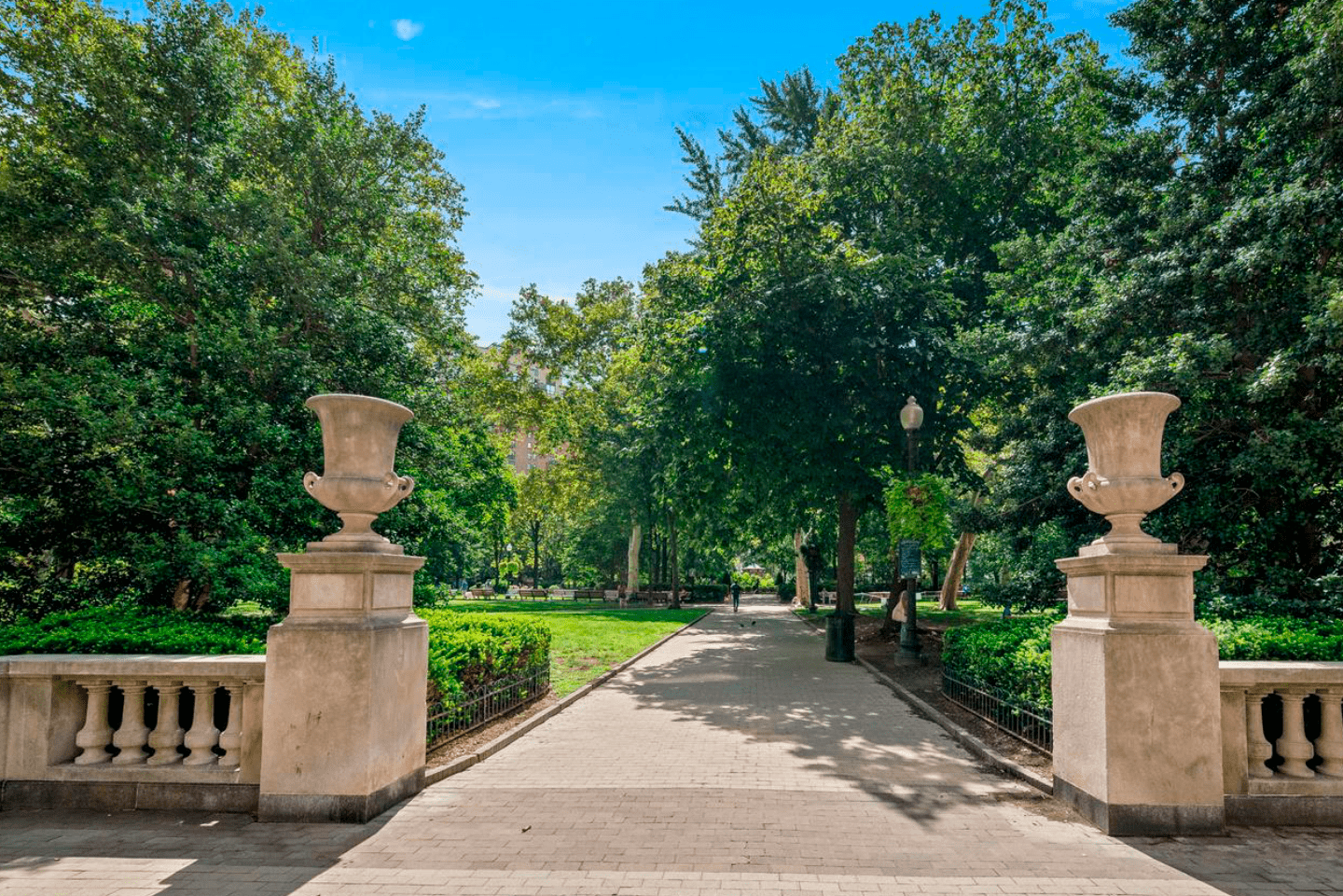
Every year the appearance of the park and its surrounding areas began to improve. Architectural structures gradually appeared in Rittenhouse Square that have survived to this day. Masters from different countries and cities took up the work. P. P. Cret was a French-born architect who was directly involved in the creation of Benjamin Franklin Parkway and the Rodin Museum.
He tried to make the park look like French gardens. So, when planning it, he took into account individual parts of the square, which he brought to the ideal he had seen when he first created the project. For the townspeople to see the man’s plan, the newly created Rittenhouse Square Improvement Association helped him finance the process. Since Cret’s hard work on the park, it has changed somewhat, but the architect’s original plan continues to be displayed.
On the square, you can see several sculptures that are famous in the city, which, like the rest of the park, are in the open air. This list includes a statue of a lion crushing a snake. The person who created this masterpiece was the French animal sculptor A.-L. Barye. This work was created in 1832 and is an allegory of the French Revolution in 1830. In the battle of the beasts, the lion symbolizes the power that defeats the snake, which in turn is evil. The sculpture was ready for installation in 1890.
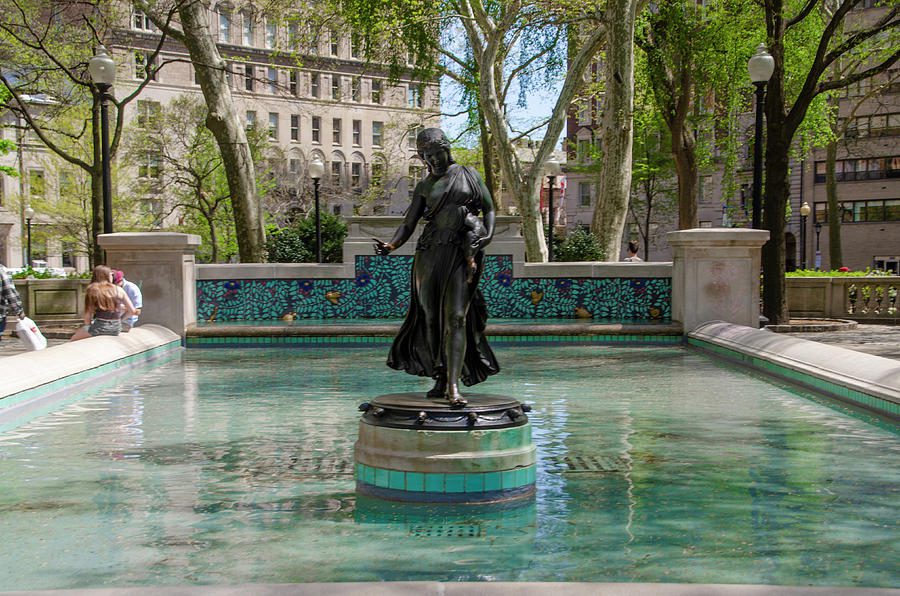
At the other end of the square, near the mirror pool, visitors can see the statue of the Duck Girl. It was created by P. Manship in 1911. It is a lyrical bronze figure of a young girl holding a duck under her arm.
Many elegant architectural structures were built on the territory of the park. These include churches and various clubs that appeared on the square thanks to the tireless work of J. Notman and F. Furness. After the Second World War, Rittenhouse Square was supplemented by other architecture, fashionable apartments, office buildings and condominiums.
Even in modern times, the park is surrounded by high-rise buildings, luxury apartments, an office tower, several popular restaurants, coffee shops and a five-star hotel. On the square, you can find everything the most demanding person wants. But once upon a time, Rittenhouse Square was a wasteland that later turned into the most prestigious place to live.
Historically, the residential area of the territory was occupied by Victorian mansions. They were eventually replaced by high-rise buildings to accommodate the large number of people who continued to arrive in the country and the city. But despite this modification, you can still see old Italianate and Art Deco buildings on the territory. It’s also safe to say that the square has become one of the least changed of all the other squares in the city.
Rittenhouse Square has become one of those neighborhoods where famous and wealthy families have lived at different times. Although this is not surprising, as the area is very convenient and comfortable for living. In certain centuries, you could see the following people: A. Cassatt, president of the Pennsylvania Railroad, J. Wanamaker, founder of the department store, E. Bacon, director of the Philadelphia City Planning Commission and others.
Modernity
Rittenhouse Square has gone through many stages of development, from an abandoned area in the woods to the most famous park in Philly. It was once a popular nightlife destination with a number of restaurants where residents gathered every evening for a glass of wine and lighthearted conversation. Later, however, people began to pay more attention to spending time outdoors. The park is covered with green grass like a blanket.
There are dozens of benches throughout the area where you can sit and get some fresh air. Rittenhouse Square has become a popular lunch spot for residents and employees of business centers. The statues that have been decorating the area for decades have become the favorite places for children and their parents. Dogs of all kinds and sizes have also come to love the park.