

Philadelphia is known for its abundance of beautiful places and recreational areas. It seems that every corner is ideal for a full-fledged photo shoot. Even if you are not in the park, an ordinary lawn or square along the road will be no less beautiful and picturesque. As for the parks, their number is literally impressive. In total, Philly has more than a hundred park zones. All of these places are awesome to relax. There you can really enjoy nature and fully abstract yourself. The website philadelphia.name will tell you more about it.
Fairmount Park is Philadelphia’s largest park. It is divided into East and West Parks and separated by the river. The total area of the two park sections exceeds eight hundred hectares.
Initially, the park consisted of three parts. But, there is another history connected to the land on which the recreation area later appeared. This territory changed hands until it was finally made public.
The highlight of this park lies in its design. Incredible landscapes mixed with peculiar details create a stunning picture. That’s why aesthetic lovers instantly fall in love with this place, adding it to the list of their favorites.
Many sculptures are installed as decorations in the park. Moreover, all of them are so diverse that one gets the impression of being on a museum tour.
This article will reveal to you the history of the creation of Fairmount Park, its expansion, and of course, unique sculptural decorations. So sit back and enjoy the story of one of Philadelphia’s most famous and largest parks.
The beginning of the history
Originally the area consisted of South Park (South Garden), Old Park and West Park.
It is worth noting that it was the South Garden that preceded the appearance of the Park Commission in 1867.
After the Civil War, the West Park began to be built.
In the 1870s, the Commission decided to expand the park area.
The land issue and replanning
The first owners of this land were Robert Morris and, later, Henry Pratt, whose Lemon Hill estate was located on the site of the future park. It is worth noting that Morris signed the Declaration of Independence.
The municipal authority acquired the estate in 1844. On September 15, 1855, the plot became public.
Later, Philadelphia’s holdings were expanded by the order of state and local regulations.
In 1858, officials launched a competition for designers who had to redevelop the park.
The park was chosen to host the 1876 Centennial Exposition. It also housed the Philadelphia Zoo.
After a while, the park was included in the National Register of Historic Places.
Sculptures
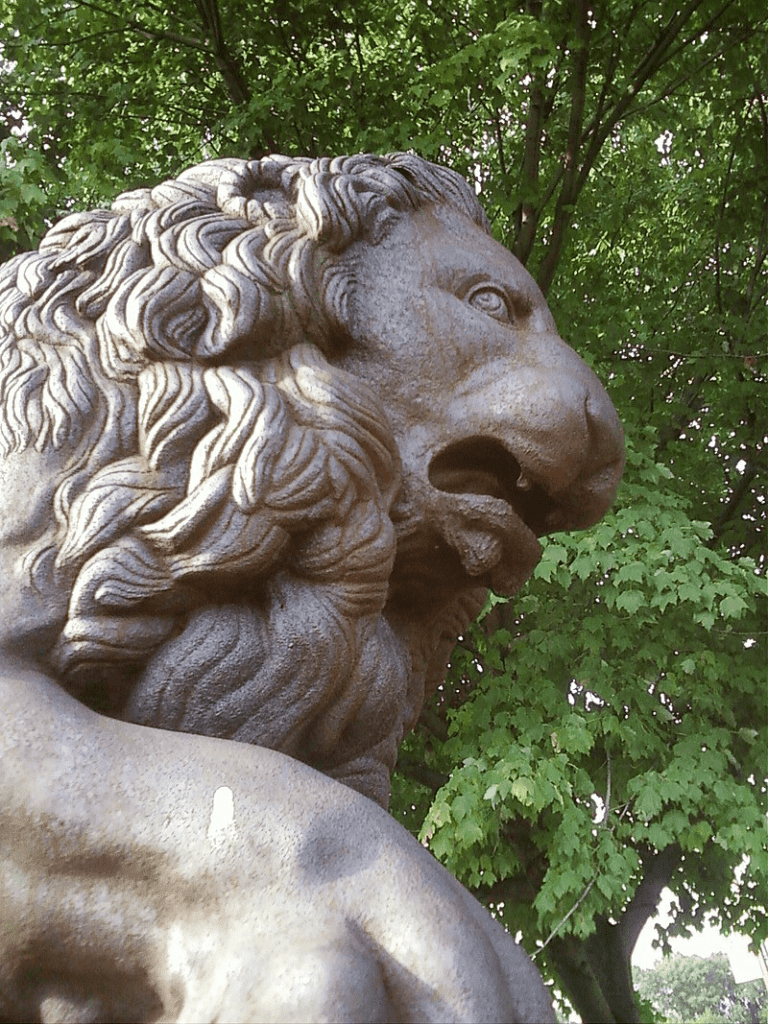
Fairmount Park is a home for plenty of truly unique things, which are the best examples of sculpture.
The Fairmount Park Art Association has to be mentioned when talking about the appearance of these masterpieces. This non-profit organization was established in 1872. Its goal was to embellish the park with various sculptures.
Medici lions, or Florentine lions, are the most famous statues. They were installed way back in 1887.
This organization is actively engaged in setting up new sculptures on the territory of the park and, at the same time, ensures proper care after them.