

Amidst modern architecture and glittering glass, the center of Philadelphia is still dominated by a structure that seems like a visitor from a bygone era. It’s not a steel-and-concrete skyscraper, but a monumental stone creation that was, in its time, not only the administrative heart but also the tallest stone building in the world without a steel frame.
The Philadelphia City Hall is an architectural paradox, hiding centuries of engineering ambition, political disputes, and urban legends behind its majestic facades. Why did a city famous for the Declaration of Independence and Quaker modesty decide to erect such a grandiose, almost European palace? And how did this stone giant, crowned by a colossal statue, long uphold an unspoken “height law” that defined the city’s entire skyline? Answers to these questions: Who built it? What unique methods were used at the time, and why is the statue of Penn at the top on philadelphia.name.
A Stylistic Triumph and a Decades-Long Build
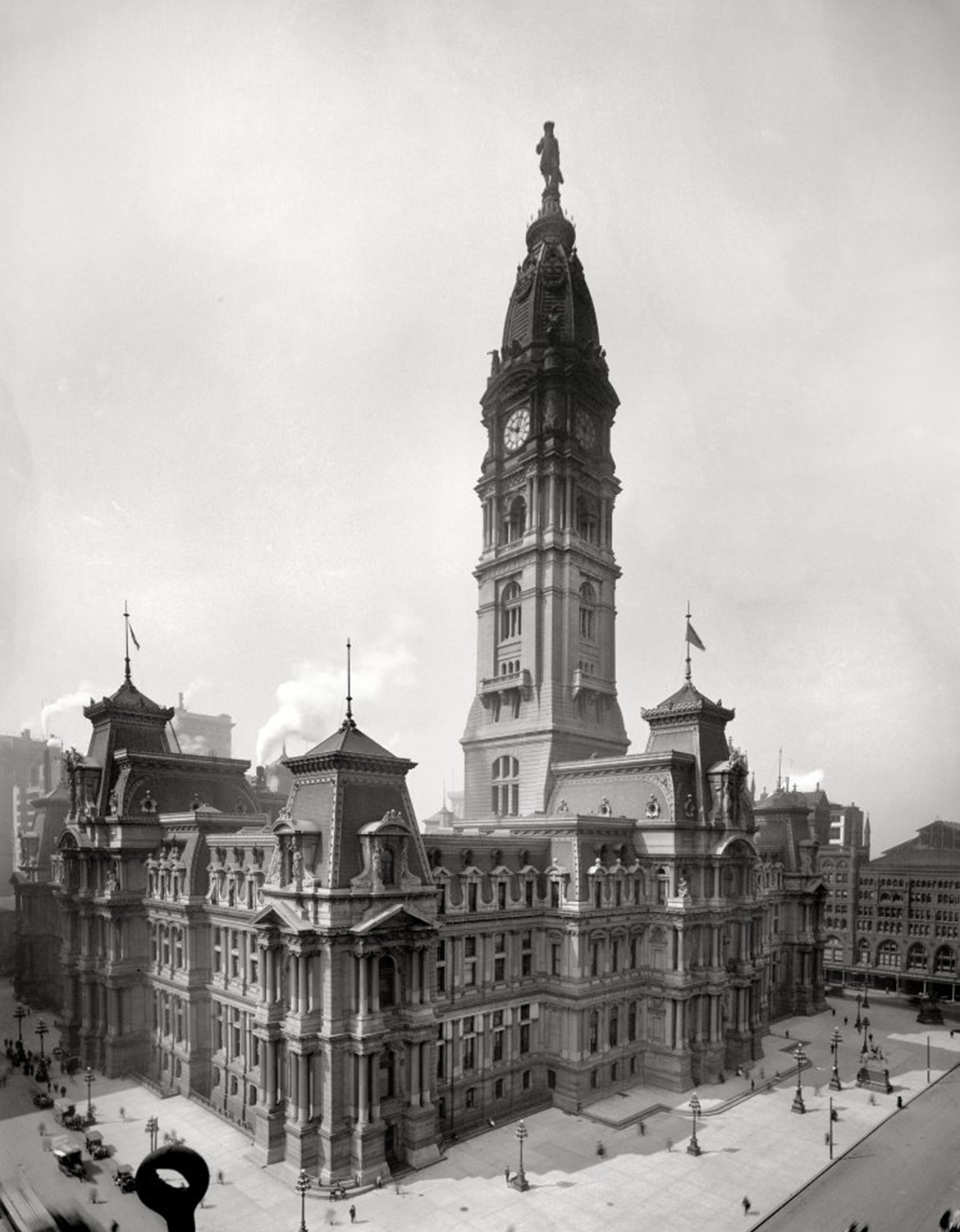
The construction of City Hall was not just a building project, but a true architectural test and titanic effort for American engineering thought following the Civil War. The design was created by the talented Scottish-born architect John McArthur Jr., who proposed something much more than a functional administrative building—a monument to civic grandeur.
Construction began in 1871, but due to constant delays, financial disputes, and changes in city administration, the process dragged on until 1901. This thirty-year construction period made the Philadelphia City Hall one of the largest long-term building projects in United States history. A colossal $24 million was spent on realizing the ambitious plans, an amount equivalent to hundreds of millions of dollars today.
McArthur chose the Second Empire style for his masterpiece. This was a deliberate choice in favor of excessive detailing, rich décor, characteristic mansard roofs, and majestic columns, all intended to symbolize Philadelphia’s wealth and authority on the world stage.
An Engineering Marvel Without a Skeleton
The most innovative and striking aspect of this construction was its fundamental engineering feature. The structure was built primarily from local white marble, limestone, and granite. Its colossal weight and height were held up only by the thickness of its stone walls. The building was completed just at the dawn of the modern skyscraper era. The fact that the massive tower, whose height surpassed most buildings in the world, was constructed without a steel framework—which was key for later high-rises like the Empire State Building—secured a unique status for the City Hall among global architectural landmarks. It became the tallest occupied masonry structure on the planet, demonstrating the limits of traditional stonework at the time.
The Stone Record
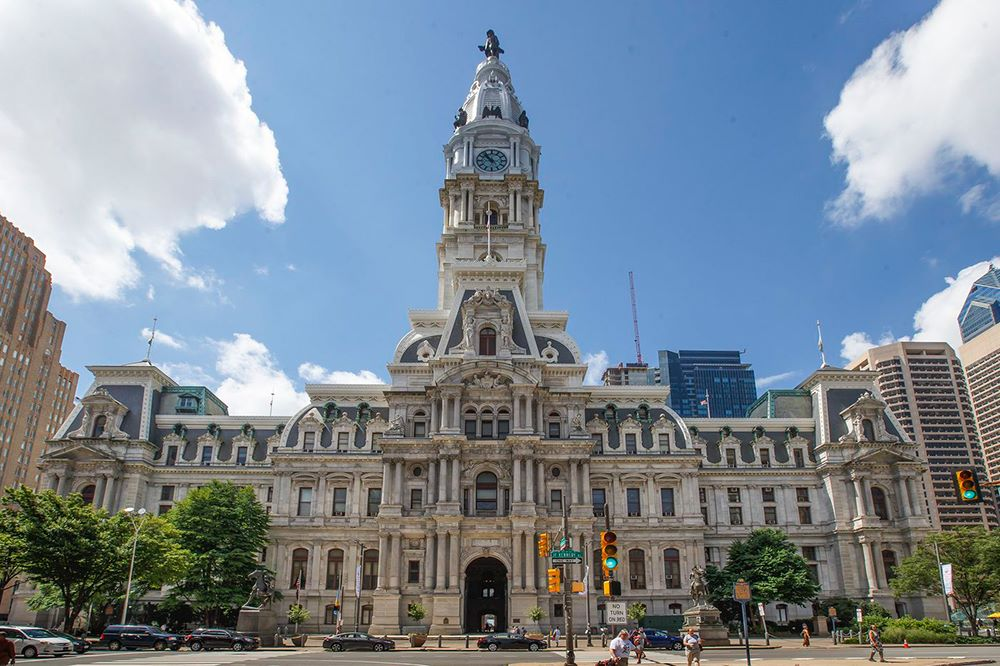
The main tower of the Philadelphia City Hall is not merely a decorative element; it is a true engineering achievement and a world record-holder of its time. It soars to an exceptional height of 167 meters (ca. 548 ft), dominating the historic city center.
This significant height secured a unique title for the structure: the tallest stone (masonry) building on the planet that is entirely devoid of internal metal support. The colossal vertical structure supports its multi-ton weight due to the exceptional strength of its massive walls and a complex, meticulously planned distribution of loads through internal support systems. City Hall relies entirely on the gravitational strength of flawlessly executed stone masonry. This fact makes it a monument to traditional building art.
The Apex of an Urban Legend
At the very top of the magnificent main tower of the City Hall sits a monumental figure—a giant bronze statue of William Penn, the distinguished founder of Pennsylvania. This sculpture is not only the finishing touch to an architectural masterpiece but also the focal point of an urban legend and symbolic geography.
The remarkable sculpture, created by Alexander Milne Calder, is striking in its scale. Its height reaches 11 meters (ca. 36 ft.). This figure grants it a unique status. The Penn statue is the tallest sculpture atop any building in the world, a record that remains unbroken to this day.
The sculptor intended this monumental object not only as a tribute to the founder but also as a symbolic compass. William Penn’s face was meant to be strictly oriented northeast, pointing toward the site of his first settlement in the colony. Thus, the figure of Penn doesn’t just adorn the tower; it serves as a guardian and a visual landmark, looking out over the city landscape from the highest, most dominant point.
The Unbreakable Oath to the Skyline
For nearly a century, City Hall was not just the city’s tallest structure; it was the absolute architectural dominant. Its grandeur was unquestioned. This prominence was tied to a unique unwritten agreement known as “Penn’s Law”—an informal but respected gentleman’s agreement between all developers and the city authorities.
The essence of this architectural covenant was that no other commercial or residential structure in the city was to exceed the height of William Penn’s hat—the highest point on the monument. This peculiar “height moratorium” was honored by developers for decades, ensuring that the majestic stone record-holder would always remain the visual and symbolic center of Philadelphia. In essence, this law reflected respect for historical heritage and identity, restraining the chaotic skyscraper development typical of other American metropolises.

The Birth of an Urban Legend
The break from this unwritten rule occurred only in 1987, with the completion of the One Liberty Place skyscraper. This modern glass and steel structure surpassed City Hall for the first time, violating the long-standing tradition. The event caused widespread public outcry and, according to urban mythology, brought about the “Curse of Penn.” The legend suggests that William Penn, whose view was blocked by the new building, turned his luck away from the city.
For the following years, none of Philadelphia’s four major sports teams (hockey, basketball, baseball, football) could win a championship in their respective leagues. This mythological belief, spread through the media and among fans, only underscored the colossal cultural significance of City Hall to local identity and demonstrated how deeply architecture can be tied to the emotional state and beliefs of the residents. The “Curse” was only lifted in 2008 when a small statuette of Penn was placed atop the Comcast Center, the next tallest building, symbolizing the return of respect for the old law.

Key Facts About City Hall
| Characteristic | Parameter / Detail | Significance and Historical Context |
| Primary Status | Tallest masonry (stone) building. | Unique construction without a steel framework. |
| Tower Height | 167 meters (548 feet) | Was long the tallest occupied structure in the world. |
| Architectural Style | Second Empire Style | Characterized by excessive detailing and grandeur. |
| Summit Symbol | Statue of William Penn 37 feet (ca. 11 m) | Tallest statue atop a building in the world. |
| Construction Period | 1871 – 1901 | A long-term project that defined late 19th-century architecture. |
| Interesting Urban Legends | “The Curse of Penn” | The prohibition of building higher than the statue, lifted in 1987. |
Sources:
- https://www.associationforpublicart.org/artwork/city-hall;
- https://philadelphiaencyclopedia.org/essays/city-hall-philadelphia;
- https://www.inquirer.com/news/curious-philly-city-hall-tower-philadelphia-william-penn-20190522.html;
- https://www.theconstitutional.com/blog/2015/01/23/philadelphia-city-hall.
