

The Benjamin Franklin Bridge is more than just an engineering structure crossing the Delaware River; it is a living symbol of unity, innovation, and architectural grandeur that connects Philadelphia, Pennsylvania, and Camden, New Jersey. It was an engineering triumph that, at the time of its opening in 1926, embodied American industrial power and ambition. Built in an era when motoring was becoming mainstream, the bridge became a critically important transport artery that forever changed the economic landscape of both states.
In the 1920s, it was the longest suspension bridge in the world and impressed the public with its unprecedented size and grace. Its construction required the use of groundbreaking engineering solutions concerning the use of steel cables and massive anchorages. Who was the brilliant architect of this project, which has withstood nearly a century of heavy traffic? And why was the name of Benjamin Franklin, Founding Father and scientist, chosen for this steel giant? We seek the answers to these and other questions on philadelphia.name.
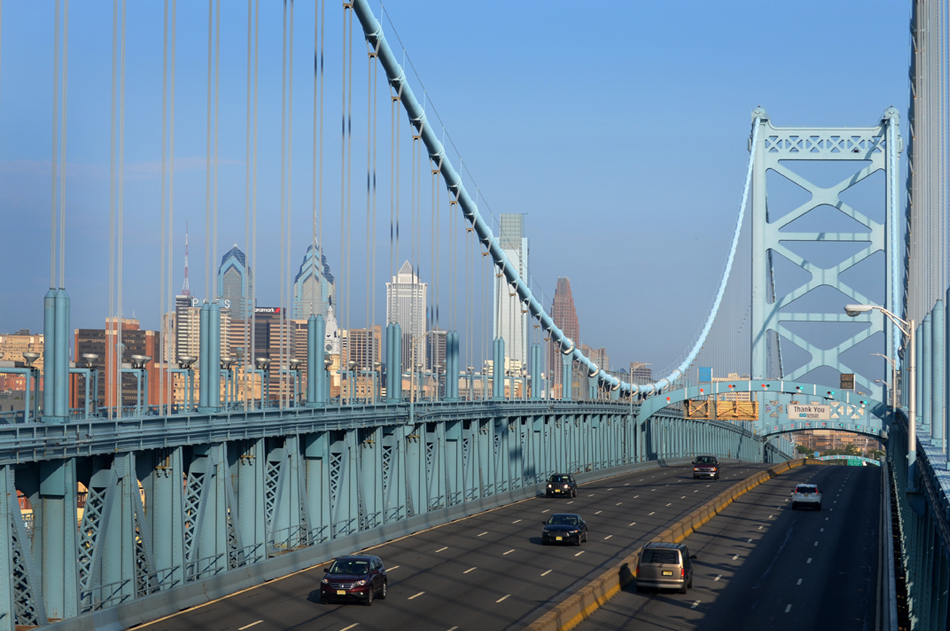
The Birth of a World Record Holder
The design and construction of this grand crossing marked not just a new milestone, but an entire new era in American bridge building. It required not only steel but a genuine engineering vision.
The chief architect was the eminent engineer Ralph Modjeski, who applied innovative, revolutionary methods to create the colossal suspension structure. It was a direct competition against nature and gravity.
At the time of its completion in 1926, the structure’s main span reached 533 meters (1,750 feet). This instantly made it the longest suspension bridge in the world. Although this engineering record did not last long, it decisively confirmed the technological superiority and leadership of the United States in this complex construction field.
The mighty towers, built from structural steel, supported the steel cables, which were a true marvel. Each cable had a diameter of 30 inches (0.76 m) and was woven from over 18,000 individual wires. The pier foundations were laid deep into the riverbed, requiring exceptionally complex and innovative hydraulic engineering work to ensure stability. These colossal efforts guaranteed the structure’s unmatched strength and became a technical model for all future large-scale suspension bridges worldwide. The Benjamin Franklin Bridge became a manifesto of the era, proclaiming the invincibility of human engineering thought.
A Multimodal Corridor
The Benjamin Franklin Bridge was conceived not just as a road, but as a comprehensive transportation hub, reflecting the massive intent to use it for interstate connection.
Today, it provides eight vehicular lanes, divided into two levels, yet its transport value extends far beyond automobile traffic.
Central to its structure is the railway track used by the PATCO Speedline trains—an exceptionally fast subway line that vitally connects downtown Philadelphia with South New Jersey. The presence of this rail link within the bridge is critically important for regional mobility, as it significantly reduces highway congestion and offers a rapid alternative.
In addition, pedestrian and bike paths were added later, transforming this colossal engineering structure into a true multimodal transportation corridor. The Franklin Bridge is a vivid example of how an engineering solution, nearly a century old, continues to adapt to the city’s modern needs and remains an indispensable artery of life for Philadelphia and its metropolitan area.
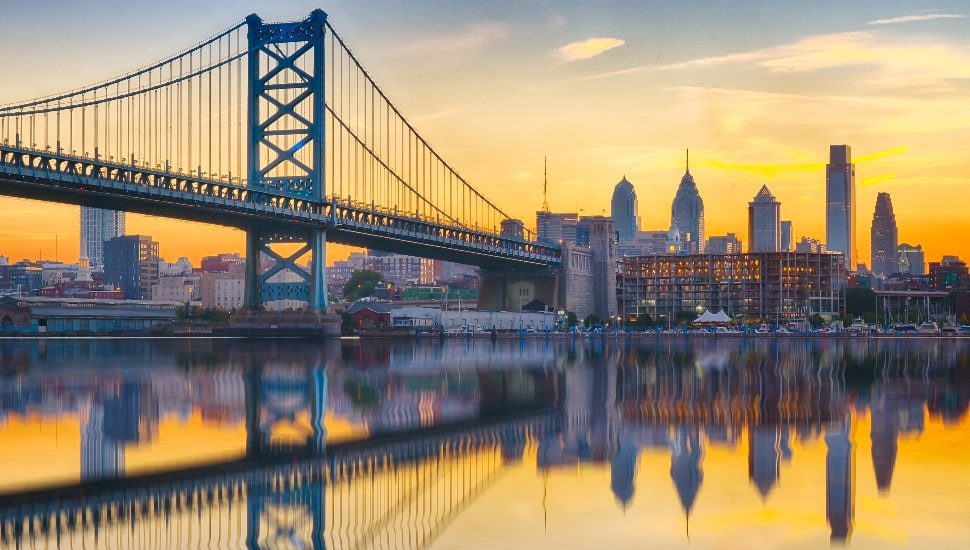
Symbolism and History
When the construction of this monumental structure was completed, it was initially named the Delaware River Bridge. Its dedication took place on July 1, 1926, and the timing was deliberate. This date coincided with the height of the American celebrations for the 150th anniversary of the Declaration of Independence, immediately underscoring its national and historical significance.
However, the bridge acquired its true allegorical meaning later. The renaming occurred in 1956 in honor of Benjamin Franklin, one of Philadelphia’s most revered citizens, an inventor, diplomat, and Founding Father. This carried a deep symbolic meaning, strongly linking the modern technology and infrastructure of the 20th century with the ideals of the Enlightenment and the founders of the American nation.
Thus, the Benjamin Franklin Bridge became not only a critically important transport artery ensuring economic flow but also a tangible reminder of the region’s historical heritage. It symbolizes the idea that innovation and progress are a direct continuation of the spirit established by the revolutionary generation.
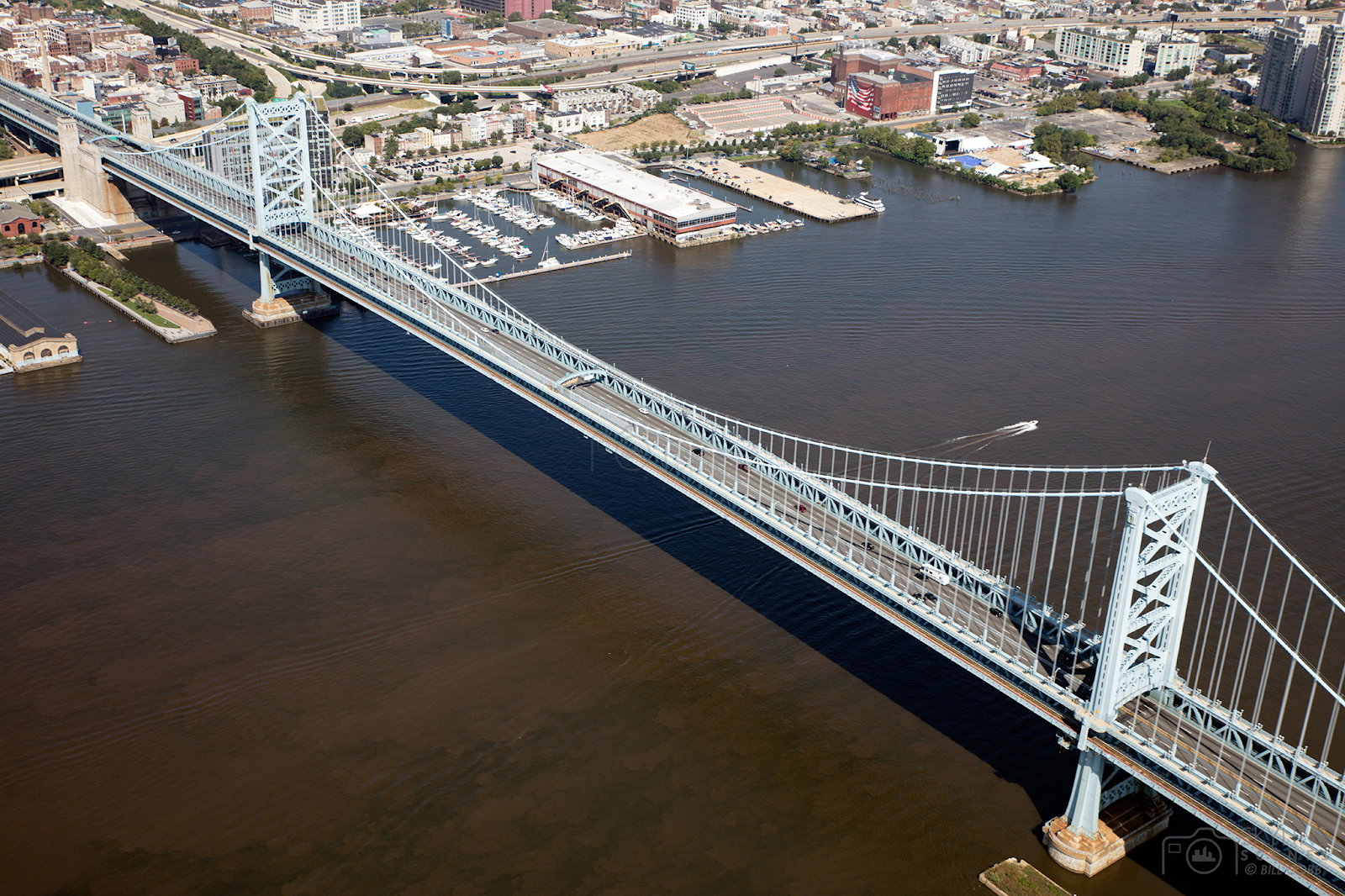
Architectural Dominance
The aesthetic appeal of the structure is no less significant than its functionality. Its massive steel towers rise above the water, creating a dramatic silhouette against the city skyline. However, the bridge is most impressive at night. In 1987, a special artistic lighting system was installed, using LED technology to illuminate the piers and cables. This spectacular illumination transformed the bridge into a brilliant beacon and a nighttime landmark of Philadelphia. The lighting colors often change, celebrating national holidays or essential events. This lighting design enhances its architectural attractiveness and emphasizes its cultural role as a visual element of urban identity.
Challenges and the Future
Despite its esteemed engineering legacy, the bridge constantly faces the challenges dictated by time. Over nearly a century of operation, the structure has been subjected to colossal traffic loads, constant vibration, and the aggressive river environment, which causes steel corrosion.
The maintenance and modernization of this steel artery require colossal financial and engineering resources. Reconstruction programs include replacing elements of the road surface, strengthening the suspension cables, and continuously battling corrosion. This is not just routine maintenance but an ongoing engineering project aimed at guaranteeing safety and longevity.
Today, the Benjamin Franklin Bridge stands as a living testament to technological resilience. Its future is linked not only to technical maintenance but also to adaptation to the transport needs of the 21st century—from traffic growth to the potential use of autonomous vehicles. The bridge remains an irreplaceable symbol of Philadelphia, which, like its namesake, combines innovation and historical permanence. It continues to dominate the Delaware River, embodying the steel eternity of American engineering.

| Characteristic | Parameter / Detail | Historical and Engineering Context |
| Year Opened | 1926 | Initially named the Delaware River Bridge. |
| Type of Structure | Suspension Bridge | Longest main span in the world at the time of completion (533 m). |
| Chief Engineer | Ralph Modjeski | Eminent specialist in the field of bridge construction. |
| Renaming | 1956 | In honor of Benjamin Franklin, a symbol of Philadelphia. |
| Primary Function | Interstate Transport Hub | Connects Pennsylvania (Philadelphia) and New Jersey (Camden). |
| Transport Routes | 8 vehicle lanes, PATCO Speedline, pedestrian/bike paths. | Multimodal design, critical for regional mobility. |
