

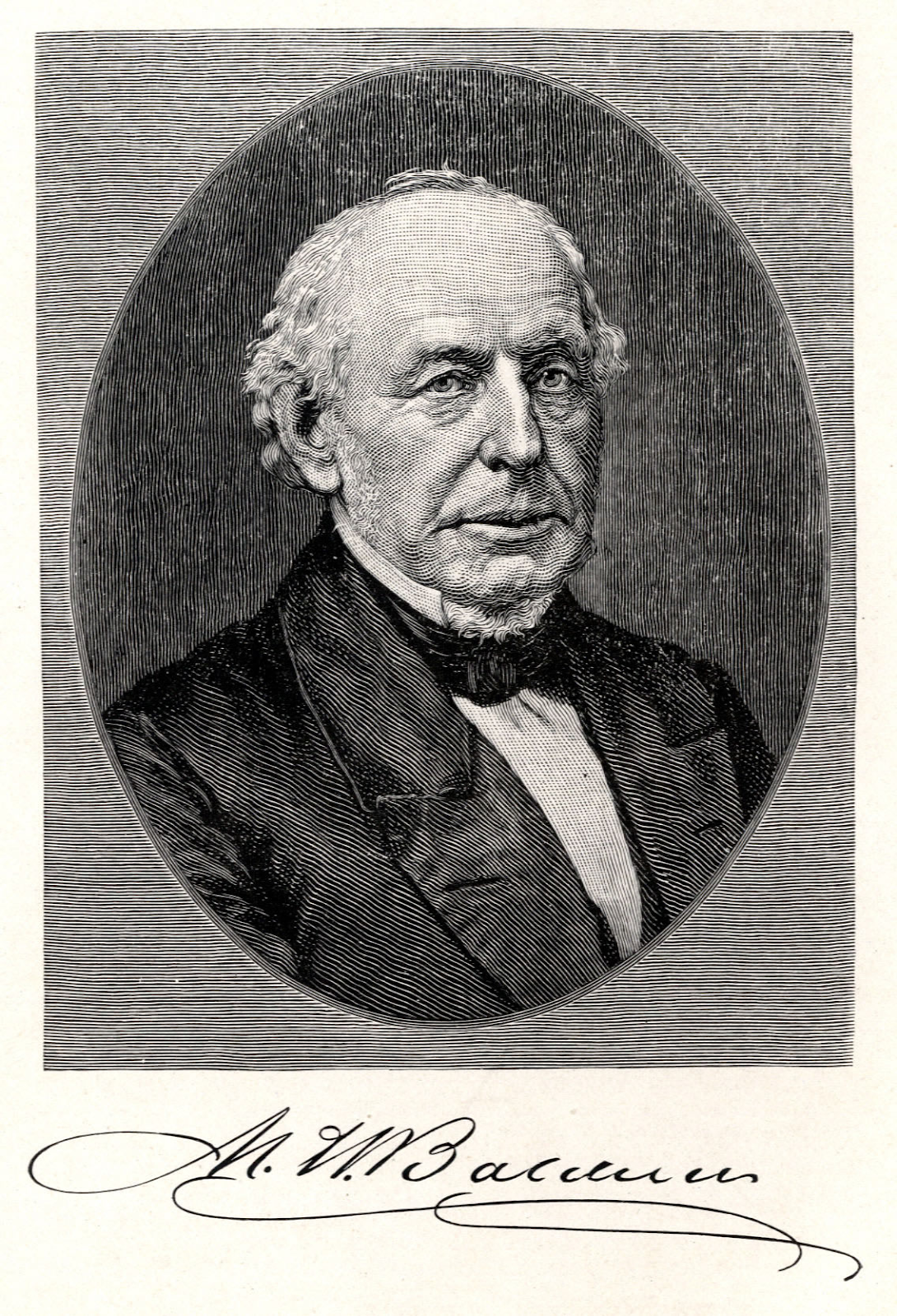
Imagine this: In the early 19th century, America was a country without a unified transportation system, and locomotives were rare, exotic imports. But in a narrow, modest basement on Fourth Street in Philadelphia, a brilliant watchmaker named Matthias W. Baldwin started a venture that transformed this situation forever.
This is where the Baldwin Locomotive Works was born, a company that quickly became the world’s largest producer of steam locomotives and was virtually the “heart” that powered the American industrial revolution. This firm didn’t just build machines; it created steel horses that crossed continents and the United States and set global standards for speed and reliability. How did a company that started by manufacturing printing presses manage to transition to creating giant locomotives? And why did Philadelphia, rather than Detroit or Pittsburgh, become the rail empire that drove America’s western expansion? For answers to questions about the history of Baldwin Locomotive Works, their achievements, and their impact on the US economy, visit philadelphia.name.
The Genius from the Basement
The history of Baldwin Locomotive Works began not with the clang of blacksmiths’ hammers, but in a delicate workshop producing jewelry and precision instruments in the early 1820s. The founder, Matthias W. Baldwin, was a man of extraordinary talent, driven by engineering curiosity and a quest for perfection.
His unexpected transition to heavy locomotive manufacturing happened thanks to a seemingly minor order. Baldwin was commissioned to build a small yet powerful stationary steam engine for a local printing house. The craftsman took on the task with remarkable enthusiasm. Soon after, the local printing house received its order. This successful project, which demonstrated his capabilities, immediately prompted him toward an ambitious idea: the development of rail transport.
The First Step
As early as 1832, Matthias Baldwin realized his ambitious vision. He introduced his first, fully functioning, albeit somewhat experimental, steam locomotive named “Old Ironsides.” This locomotive, built for the nascent Philadelphia, Germantown and Norristown Railroad, became his true baptism by fire in the world of heavy industry.
Although his creation had certain flaws, it essentially laid the solid foundation for a future industrial giant. This prototype proved the viability of American locomotive manufacturing. Baldwin himself was known for his unwavering commitment to quality and innovation. He believed that every part should be crafted with watchmaker’s precision. It was this philosophy of perfection, born from the experience of creating precise mechanisms, that became the unshakeable foundation of the firm’s reputation. It turned Baldwin into a global synonym for reliability.
The Era of Steam Locomotives
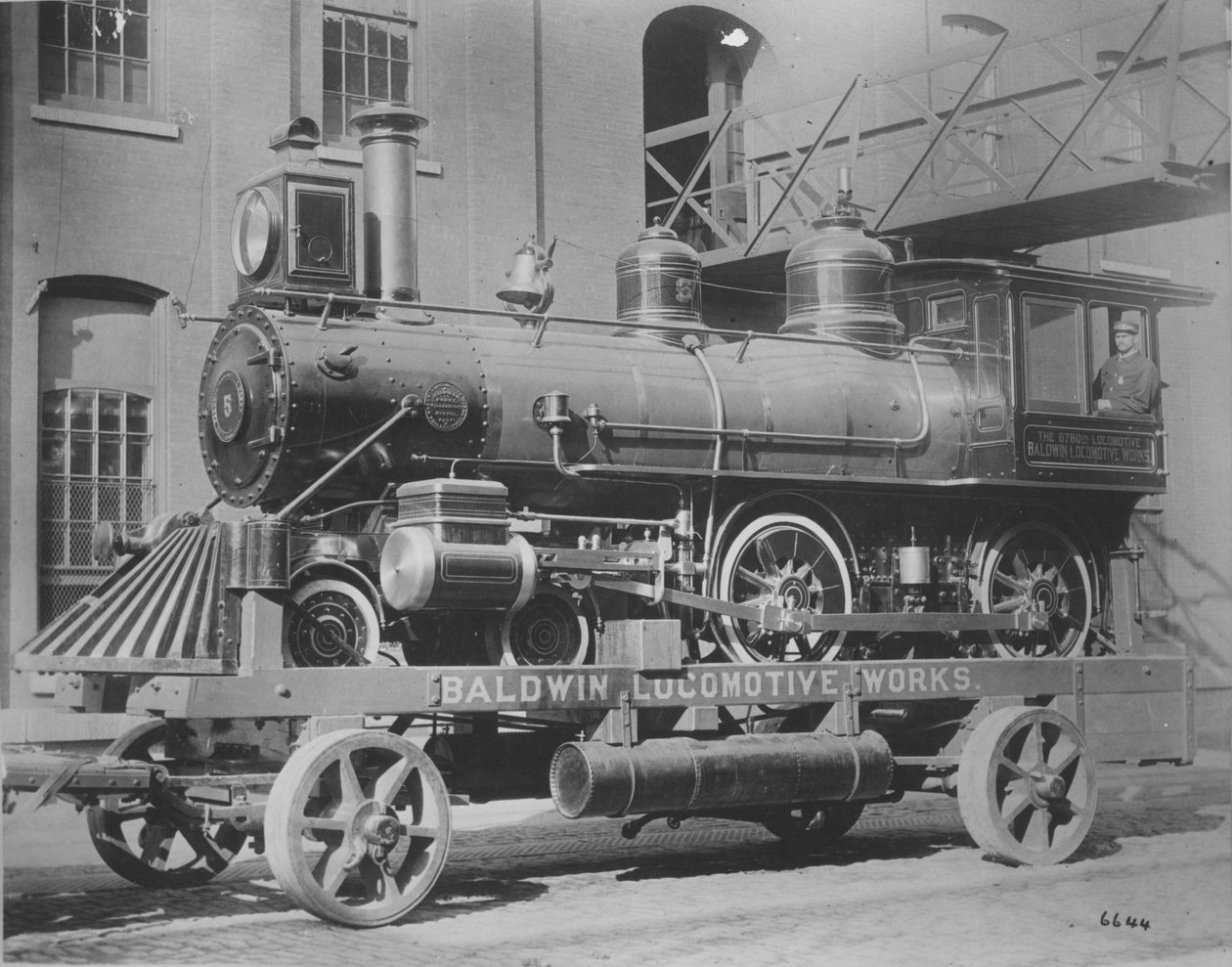
During the Golden Age of Railways (the second half of the 19th century), Baldwin ceased to be just a manufacturer; it became a symbol of American industrial might and technological dominance.
To meet the enormous, insatiable demand for locomotives pushing the frontier westward, the company was forced to enact true industrial revolutions. Baldwin was the first to implement mass production and strict standardization of components. This efficiency allowed it to rapidly scale up production volumes.
Initially, manufacturing was located in Philadelphia, but it was later moved to the Eddystone, Pennsylvania area, where it occupied gigantic territories. At its peak, Baldwin was producing thousands of locomotives annually—a record-breaking figure for its era, confirming its undisputed leadership. The firm offered the widest range of models, from shunting engines to powerful freight locomotives capable of pulling wagons through mountain passes.
Technical Masterpieces
Baldwin gave the world true engineering benchmarks that became the foundation of rail systems globally:
- Type 4-4-0 (American). Became more than just a locomotive; it was the backbone of the American passenger network and a symbol of speed.
- Type 2-8-2 (Mikado). A compelling freight locomotive, indispensable for transporting raw materials.
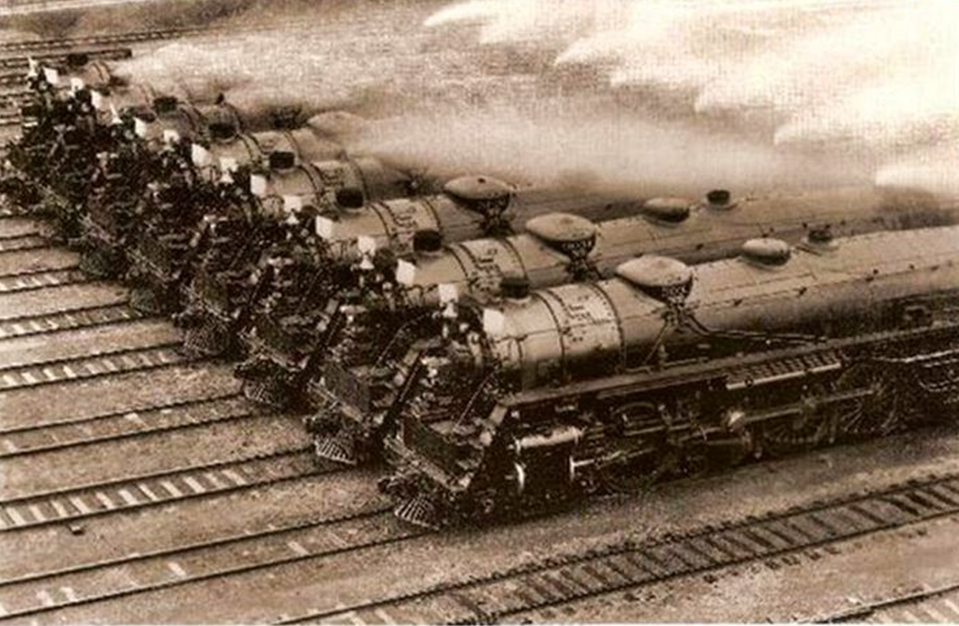
- Type 4-8-4 (Northern). A high-speed passenger locomotive that became the king of long-distance expresses.
Every locomotive was a technical masterpiece of its time, requiring not only metal but also the high skill of the workers and engineers who translated blueprints into steel.
Baldwin’s Global Footprint
Baldwin Locomotive Works played an absolutely key role in global industrialization, extending far beyond the United States. The firm was the world’s leading exporter of rail equipment, supplying its powerful locomotives to every continent: Europe, Latin America, Asia, and Africa.
These American machines were highly valued by international rail companies for their exceptional reliability, durability, and unique ability to operate in the most diverse climatic and geographical conditions—from tropical humidity to mountain altitudes. Baldwin offered customized solutions for the unique requirements of each country.
For example, during World War I, the company demonstrated its manufacturing flexibility by completely switching to military production. It produced not only specialized military locomotives for the Allies but also millions of artillery shells, supporting the military-industrial complex.
This global footprint of Baldwin Locomotive Works vividly underscores its technological dominance and economic influence in the first half of the 20th century. It was a true industrial ambassador for America.
The Dawn of New Energy
After World War II, the global rail industry underwent a fundamental shift—the era of steam power was irreversibly ending, yielding to diesel-electric technology. This transformation, unfortunately, proved fatal for Baldwin Locomotive Works.
The company was too late and hesitant to adopt diesel technologies, which demanded an entirely different engineering approach (electric transmissions, high-power diesel engines). Because of this, Baldwin quickly ceded market share to newer, more adaptable competitors such as General Motors (EMD) and General Electric.
Baldwin’s diesel locomotives could not compete in efficiency, standardization, or reliability with the products of these giants. Although the company attempted to enter the market, the lack of significant government contracts and technological backwardness led to catastrophic financial losses.
The last production line of Baldwin Locomotive Works was closed in 1956. This event marked the end of an era not only for this industrial giant from Philadelphia but also for the American steam engineering industry as a whole. It became a tragic example of how innovative inertia can destroy even the largest market leader.
A Place in World History
The decline of the once successful manufacturer became not just a story of one company’s failure, but a symbolic epilogue to the age of steam locomotives in Philadelphia. The city, which for decades had been a global industrial center and supplied its “steel hearts” to railways worldwide, lost its technological vanguard.
Despite the 1956 closure, Baldwin’s legacy remains colossal. Philadelphia is forever inscribed in history as the cradle of mass locomotive manufacturing. Matthias Baldwin’s engineering philosophy, founded on precision and reliability, shaped the standards of American railroading and facilitated the industrialization of the continent.
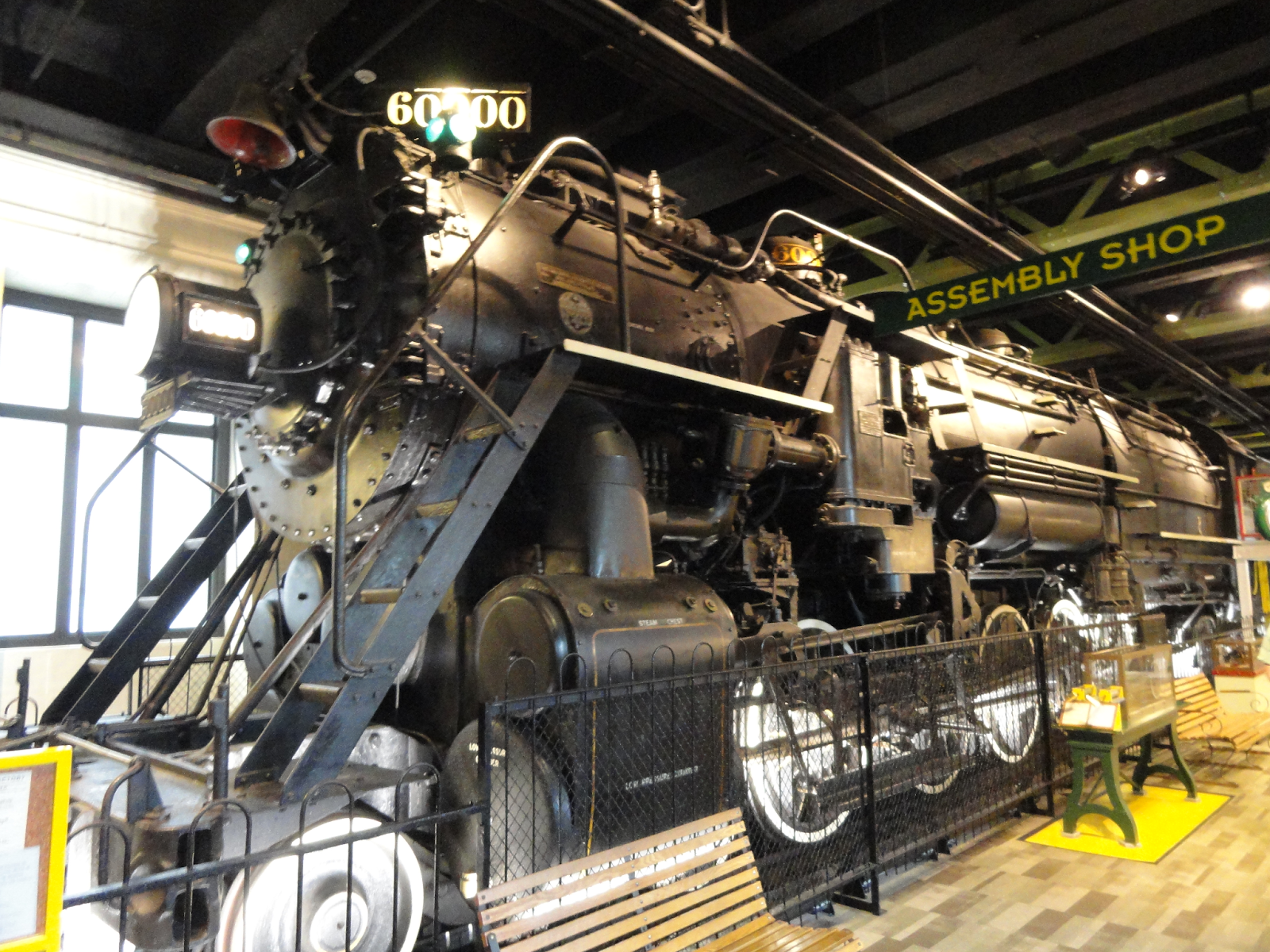
Although Baldwin failed to adapt to diesel power, its history is a powerful lesson about the inevitability of technological change. Its manufacturing facilities in Eddystone and its impact on global logistics confirm that for a period, Philadelphia was the city that moved the world. Its locomotives, from “Old Ironsides” to the powerful Northern types, are now valuable museum exhibits, immortalizing the memory of the rail empire born in Pennsylvania.
